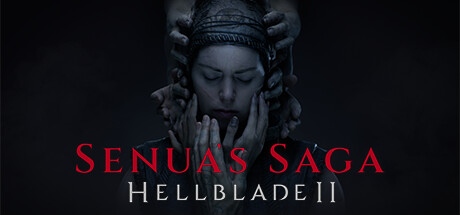
Polygon’s report that an Xbox studio could shut down two weeks after announcing a new game put Ninja Theory on the watchlist alongside the rest of Microsoft’s first-party rebalance. Hellblade II shipped to mixed-strong reviews and resonated hardest with players who valued mood and audio over runtime — and that’s exactly the slice of the market other studios have learned to serve. The Hellblade 2 alternatives below cover the cinematic-action-with-headphones niche from different angles: combat-heavy, narrative-heavy, horror-tinted, and short-enough-to-finish.
We tested seven Senua’s Saga: Hellblade II alternatives on PC, weighing audio design, single-player pacing, the “every frame is composed” mood, and how much combat depth each one offers.
Quick comparison
| Game | Best for | Free option | Starting price | Standout feature |
|---|---|---|---|---|
| Hellblade: Senua’s Sacrifice | The original Senua experience | None | $29.99 | The binaural audio that defined the series |
| A Plague Tale: Requiem | Cinematic sister-and-brother survival | Demo | $59.99 | Plague-rat swarms as combat mechanic |
| Returnal | Roguelike third-person bullet hell with mood | None | $59.99 | Procedural runs with cinematic cohesion |
| God of War | Mythological action with weight | None | $49.99 | Cinematic single-take camera |
| Alan Wake 2 | Survival horror with story focus | None | $49.99 | Switching between two protagonists |
| The Medium | Dual-reality horror with strong audio | None | $49.99 | Akira Yamaoka soundtrack |
| Soulstice | Stylish combo-driven action | Demo | $39.99 | Dual-protagonist combat system |
Why people leave Hellblade 2 after one play
Very short runtime
The campaign clocks in around 6 to 8 hours. The story arc resolves and there’s no New Game Plus or DLC roadmap. Players who loved the experience finish wanting more.
Combat layer is intentionally thin
Hellblade 2 leans on cinematic encounters more than mechanical depth. That works for the mood; it leaves combat-focused players looking for a denser system.
Puzzle fatigue
The environmental sigil-matching puzzles from the first game return. They divided opinion in 2017 and divide opinion in 2024.
Ninja Theory's future is uncertain
The Xbox reset noise around Microsoft’s first-party studios makes a Hellblade 3 less safely expected. Players are reading other studios for their next “cinematic-action with strong audio” hit.
The alternatives
Hellblade: Senua’s Sacrifice — Best original Senua experience
Hellblade: Senua’s Sacrifice is the 2017 original. It defined the binaural-audio approach, the mental-illness narrative, and the cinematic-third-person template Hellblade 2 follows. Many fans consider the original tighter than the sequel, with better-paced puzzle design and a stronger ending. Costs less than half the sequel.
Where it falls short: Combat is intentionally simple — three buttons, no skill tree. Visual fidelity shows its age compared to Hellblade 2’s UE5 work. Puzzle environment scanning can be tedious.
Pricing:
- Free: none
- Paid: $29.99 base, frequent Steam sales drop it below $10
- vs Hellblade 2: same shape, smaller budget, similar length, tighter arc
Migrating from Hellblade 2: Play with headphones — the binaural mix is the feature. The combat is simpler, the puzzle pacing is faster, and the ending hits harder than the sequel for many players.
Download: Hellblade: Senua’s Sacrifice on Steam
Bottom line: Pick this if you haven’t played the original. The sequel improves the visuals but the original is the cleaner package.
A Plague Tale: Requiem — Best cinematic survival
A Plague Tale: Requiem from Asobo Studio is a cinematic third-person adventure set in 14th-century plague-ridden Provence. The sister-and-brother story carries genuine emotional weight, the rat-swarm mechanic is the combat backbone, and the level art is consistently among the best of any AAA game in recent years.
Where it falls short: Stealth puzzles can be unforgiving. The story is unrelentingly dark — not a casual evening unwind. Combat variety is limited; the rats are the main verb.
Pricing:
- Free: demo on Steam
- Paid: $59.99 base
- vs Hellblade 2: longer (15+ hours), more set pieces, similar cinematic register
Migrating from Hellblade 2: Headphones again — the audio design is excellent. Let the slower-paced stealth sections breathe rather than trying to rush them.
Download: A Plague Tale: Requiem on Steam
Bottom line: Pick this when you want a longer cinematic adventure with the same mood ambition.
Returnal — Best roguelike with cinematic mood
Returnal from Housemarque is a third-person roguelike bullet hell that takes itself seriously. The procedural runs combine with cinematic story interludes that pay off across multiple loops. Movement and combat are the deepest on this list; the difficulty curve is real.
Where it falls short: Roguelike structure means losing progress repeatedly, which won’t suit everyone. PC port had issues at launch; current state is much better. Story is fragmented across runs and asks the player to assemble it.
Pricing:
- Free: none
- Paid: $59.99 base on Steam
- vs Hellblade 2: much deeper combat, roguelike structure, similar mood ambition
Migrating from Hellblade 2: Accept the dying-and-retrying loop. The story rewards investment across multiple loops; the early hours are the tuition.
Download: Returnal on Steam
Bottom line: Pick this when you want depth in combat and you’ll embrace the roguelike loop.
God of War — Best mythological action
God of War (the 2018 entry, on PC since 2022) is the gold standard for cinematic single-player action. Norse mythology, a father-son story, a single-take camera, and a combat system with both depth and accessibility. Around 25 hours for the main story, more for full clear.
Where it falls short: Combat starts slow — the first few hours teach the system before it sings. Some puzzle pacing breaks the momentum. Longer than Hellblade 2 by a factor of three.
Pricing:
- Free: none
- Paid: $49.99 base
- vs Hellblade 2: deeper combat, much longer, similar mood weight
Migrating from Hellblade 2: Treat the first five hours as the tutorial. Once you unlock the rune attacks and Atreus’s combat AI matures, the game opens up dramatically.
Download: God of War on Steam
Bottom line: Pick this when you want the cinematic-action standard and have time for a 25-hour campaign.
Alan Wake 2 — Best narrative survival horror
Alan Wake 2 from Remedy is a survival horror game with a story scope rare in the genre. Two playable protagonists, recurring full-motion-video integrations, and a metanarrative that gets weirder the longer you play. Audio design is dense; the soundtrack is one of the best of the year.
Where it falls short: Combat is intentionally limited — ammo is scarce by design. Story expects familiarity with the original Alan Wake and the Control universe to land fully. Slow pacing in the middle act.
Pricing:
- Free: none
- Paid: $49.99 base on Steam
- vs Hellblade 2: deeper story, survival horror not action, longer
Migrating from Hellblade 2: Play the original Alan Wake first if you can — the sequel’s late-game callbacks land much harder with the context.
Download: Alan Wake 2 on Steam
Bottom line: Pick this when you want narrative ambition and you can stomach survival-horror resource pressure.
The Medium — Best dual-reality horror
The Medium from Bloober Team is a third-person psychological horror with a dual-reality mechanic — the screen splits into two worlds when the protagonist’s spirit walk activates. Soundtrack by Akira Yamaoka (Silent Hill) and Arkadiusz Reikowski. Visual style and audio design are the strongest assets.
Where it falls short: Fixed camera angles divide opinion. Combat is minimal — closer to a puzzle game than action. Pacing slows in the middle.
Pricing:
- Free: none
- Paid: $49.99 base
- vs Hellblade 2: very different combat scope, similar mood and audio ambition
Migrating from Hellblade 2: Play with headphones. Yamaoka’s soundtrack does as much heavy lifting as Hellblade’s binaural audio.
Download: The Medium on Steam
Bottom line: Pick this when you want audio-driven horror with a fixed-camera, classic-survival-horror feel.
Soulstice — Best stylish combo action
Soulstice is a dual-protagonist character-action game with a Devil May Cry-style combo system layered onto a dark gothic setting. Two sisters share combat input — one is the body, one is the spirit. The combat system is deeper than anything else on this list; the story is operatic.
Where it falls short: Story leans hard into gothic-melodrama tropes and won’t be for everyone. Some enemy types are tedious. The camera is the weakest part of the package.
Pricing:
- Free: demo on Steam
- Paid: $39.99 base
- vs Hellblade 2: much deeper combat, weaker story, similar gothic mood
Migrating from Hellblade 2: Learn the combo system in the early chapters. The game has more mechanical depth than the first impression suggests.
Download: Soulstice on Steam
Bottom line: Pick this when combat depth was the missing piece in Hellblade 2 and gothic mood is fine with you.
How to choose
Pick Hellblade: Senua’s Sacrifice if you haven’t played the original — it’s the tighter package.
Pick A Plague Tale: Requiem for the same cinematic mood with a longer runtime and a story-first focus.
Pick Returnal for the deepest combat on this list and a roguelike structure.
Pick God of War for the gold-standard cinematic single-player action with a long campaign.
Pick Alan Wake 2 for narrative ambition and survival horror pacing.
Pick The Medium for audio-driven horror with classic survival-horror DNA.
Pick Soulstice when combat depth is the priority and you accept the lower production budget.
Stay on Hellblade 2 for the visual benchmark — UE5 work that genuinely stands out — and the audio mix that no other game in this list matches at the binaural level. A second playthrough rewards the audio design even if the story doesn’t.
FAQ
Is Hellblade 3 happening?
Nothing is officially confirmed. The Xbox studio shake-up has put Ninja Theory’s project pipeline in doubt. A third Hellblade is not safely expected.
What is the closest game to Hellblade 2?
The original Hellblade: Senua’s Sacrifice on shape and feel. A Plague Tale: Requiem on cinematic adventure pacing. The Medium on audio-driven horror mood.
Do I need headphones for these games?
Hellblade and Hellblade 2 are designed around binaural mixing — headphones are essential. The Medium, Alan Wake 2, and A Plague Tale: Requiem all reward headphone listening but don’t require it.
What is the shortest game on this list?
Hellblade: Senua’s Sacrifice at around 7 to 9 hours. The Medium and Soulstice are next at around 10 to 12 hours each.
Are any of these on PC Game Pass?
Hellblade 2, the original Hellblade, and Alan Wake 2 have rotated through Game Pass. Returnal, God of War, and A Plague Tale: Requiem have not. Check current availability before buying.