Polygon’s coverage of the Combolands demo made a small genre claim that turned out to be bigger than one game: the city-builder is quietly becoming a roguelike. Combolands drops the Cities: Skylines placement loop into a run-based structure, where every settlement collapses eventually and the meta-progression carries into the next map. That framing has been building for a few years, and there are now enough finished games doing it well to fill a shortlist.
We ranked seven desktop city-builder roguelikes that put the settlement inside a restart loop, either by design (every session ends, then you unlock more starting options) or by pressure (the map itself resets you). The list mixes the polished picks with the deep-cuts and skips the pure survival builders that never end.
What to look for in a city-builder roguelike
- Meaningful meta-progression. Runs must end and the ending must matter. Unlocks between runs are the point; a builder without them is just a builder.
- Short-to-medium session length. Two to four hours per run is the sweet spot. Colony survival games that expect 40-hour saves are a different genre.
- Random map or seed variety. Same starting layout every time undercuts the roguelike promise.
- Systems that combo. The Balatro comparison lives or dies here: buildings, workers, or blueprints that stack in non-obvious ways.
- Failure states you can read. A run that crashes to famine or a storm should teach a lesson, not feel arbitrary.
Quick comparison
| Game | Best for | Platforms | Run length | Price |
|---|---|---|---|---|
| Against the Storm | The polished pick, deep synergies | Windows, macOS, Linux | 2-3 hr | Paid |
| Dotage | Grim, tight, punishing | Windows | 1-2 hr | Paid |
| Rise to Ruins | Old-school pixel siege builder | Windows, macOS, Linux | 2-4 hr | Paid |
| Cataclismo | Wall-building meets tower defence | Windows | 3-5 hr | Paid |
| Terra Nil | Reverse builder, restore then restart | Windows, macOS, Linux | 1-2 hr | Paid |
| Frostpunk 2 | Long-form societal survival, chapter runs | Windows, macOS | 8-15 hr | Paid |
| Songs of Syx | Empire-scale, historical, moddable | Windows, macOS, Linux | 5-10 hr | Paid |
The 7 best city-builder roguelikes for desktop
1. Against the Storm, the polished pick
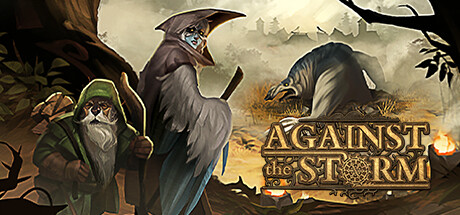
Against the Storm by Eremite Games is the defining game in this niche. Each cycle throws a fresh biome, a race mix of humans, harpies, beavers, foxes, and lizards with different food demands, and a randomised tech tree. Blueprint drafts every few years let you steer the settlement into a specialised loop. Survive the storm cycle, bank meta-currency, unlock new starting options, and take on tougher regions on the world map.
The systems interlock the way the Balatro comparison implies. Beavers plus pine woods plus a woodcutter turns firewood into ale via a completely different chain than lizards on peat with a smelter. Runs are two to three hours, replayability is enormous, and the difficulty spread from Settler to Prestige 20 covers a full learning curve.
Where it falls short: The tutorial is thorough but slow. Late-Prestige runs demand build-order memorisation. Some players find the run structure repetitive after 200 hours.
Pricing:
- Free: Demo on Steam
- Paid: Full game around $30
Platforms: Windows, macOS, Linux (via Proton on Steam Deck)
Download: Against the Storm on Steam
Bottom line: The one to install first. Buys itself back in hours per dollar.
2. Dotage, grim and punishing
Dotage by Oldmoustache Gameworks is the miniature. Settlements are small, worker slots are tight, monsters attack at night, and the End arrives on a fixed timer. You never save a settlement long term; you just try to survive long enough to unlock the next generation. The art is grim-fairy-tale and the loop is savage.
Runs land in the one-to-two-hour band, so failure feels like an experiment rather than a loss. Each generation’s failure hands starting perks to the next, which is where the roguelike layer lives.
Where it falls short: UI is dense and small. The combat is coarse compared to the building. Some biomes end in unavoidable death regardless of play, which some players read as fair and others as arbitrary.
Pricing:
- Free: Steam demo during Next Fest windows
- Paid: Full game around $20
Platforms: Windows
Download: Dotage on Steam
Bottom line: The pick when Against the Storm feels too generous.
3. Rise to Ruins, old-school pixel siege
Rise to Ruins by Raymond Doerr is the elder statesman. It shipped in Early Access years before the term “city-builder roguelike” existed, and its formula is close to the modern one: build a village, defend at night, extract a soul currency, restart in a new region with permanent unlocks. Pixel art keeps the frame rate high, so late-game colonies with 200 villagers under siege stay smooth.
The world map layer is what makes it a true roguelike. Every region has a modifier, and dying on a hard region loses the village but keeps the meta unlocks.
Where it falls short: Combat is broad rather than tactical. Early game can feel slow. The interface is functional rather than pretty.
Pricing:
- Free: Steam demo intermittent
- Paid: Full game around $20
Platforms: Windows, macOS, Linux
Download: Rise to Ruins on Steam
Bottom line: The pick for the low-fi pixel look and the longest history in the genre.
4. Cataclismo, wall-building meets tower defence
Cataclismo by Digital Sun (Moonlighter, The Mageseeker) is the tactile one. You build fortifications brick by brick during the day, then defend them wave by wave at night. The campaign runs a mission structure, but the roguelike layer lives in the skirmish and Rift modes: procedurally generated cliffs and coastlines force a new fortress design every session.
The synergy layer is architectural. A wall too thin collapses, a tower placed wrong loses line of sight, a bridge above a chokepoint routes enemies into a kill zone. Runs are longer than Against the Storm, closer to three-to-five hours.
Where it falls short: The wall-building interface has a steep learning curve. Late waves can spike difficulty sharply. macOS/Linux support depends on Proton for now.
Pricing:
- Free: Steam demo
- Paid: Full game around $30
Platforms: Windows (macOS, Linux via Proton)
Download: Cataclismo on Steam
Bottom line: Best for players who want the roguelike layer on top of tower defence, not resource management.
5. Terra Nil, reverse builder
Terra Nil by Free Lives inverts the loop. You start with a dead map and rebuild an ecosystem, then dismantle every structure and evacuate. Each session ends when the map is restored and cleaned, and the meta-progression unlocks harder biomes with tighter constraints.
The roguelike framing is unusual: you win each map, but the point is that you never build the same restoration twice. Rivers, forests, dunes, and reefs each demand a different sequencing.
Where it falls short: Not a survival game, so players expecting combat or attrition will bounce. Sessions are shorter than the others on this list, closer to 60-90 minutes. Some biomes feel more constrained than roguelike.
Pricing:
- Free: Steam demo
- Paid: Full game around $25, DLC around $10
Platforms: Windows, macOS, Linux
Download: Terra Nil on Steam
Bottom line: Best for the meditative loop. The anti-Frostpunk.
6. Frostpunk 2, long-form societal roguelike
Frostpunk 2 by 11 bit studios stretches the run structure over a full campaign chapter. Each chapter has an end state, a societal collapse condition, and unlocks that carry into the next scenario or into the Utopia Builder sandbox. The moment-to-moment builder is heavier than the others on this list, but the run framing puts it in the same family.
Political factions and law adoption make the failure states more varied than resource collapse. A run can end because you passed a law that broke the coalition, not because the coal ran out.
Where it falls short: Slower than every other pick here. Chapters run eight to fifteen hours. Not a lunch-break game.
Pricing:
- Free: Steam demo periodically
- Paid: Full game around $45
Platforms: Windows, macOS
Download: Frostpunk 2 on Steam
Bottom line: The pick when you want the run layer applied to a full-length strategy game.
7. Songs of Syx, empire-scale historical builder
Songs of Syx by Gamatron AB is the sprawling one. Runs scale from a few settlers to cities of tens of thousands, and each empire ends because internal politics or external war eventually break it. Restarting on a new seed with unlocked knowledge preserves the roguelike loop even inside sessions that last dozens of hours.
The moddability is where the genre credentials show. Fresh races, factions, and biomes get added by the community every month, which keeps the “next run” feeling different.
Where it falls short: Dated UI. Steep learning curve. Combat is abstract compared to the rest of the list.
Pricing:
- Free: Steam demo
- Paid: Full game around $25
Platforms: Windows, macOS, Linux
Download: Songs of Syx on Steam
Bottom line: The pick when you want empire-scale ambition inside a run structure.
How to pick the right one
- Never played a builder-roguelike before: Against the Storm. Nothing else onboards this cleanly.
- You bounced off Against the Storm as too soft: Dotage. Punishing and brief.
- You want pixel art and a longer history: Rise to Ruins.
- You like tower defence more than resource loops: Cataclismo.
- You want the meditative anti-run: Terra Nil.
- You want the run layer inside a full-length strategy game: Frostpunk 2.
- You want moddability and empire scale: Songs of Syx.
FAQ
What is a city-builder roguelike?
A city-builder where every settlement is expected to end, and the ending unlocks options for the next run. The city-building surface stays the same, the meta-progression around it is what makes the genre.
Is Against the Storm the best city-builder roguelike?
For polish, synergy depth, and onboarding, yes. Dotage is tighter, Cataclismo is more tactical, Songs of Syx is deeper long-term, but Against the Storm is the reliable first recommendation in 2026.
Are any of these free?
Every game listed has a Steam demo. There are no fully-free entries in this niche in 2026.
Do these run on Steam Deck?
Against the Storm, Rise to Ruins, Terra Nil, and Songs of Syx are Steam Deck Verified or Playable. Frostpunk 2, Dotage, and Cataclismo range from Playable to Unsupported depending on version.
What about Combolands?
Combolands is still in demo as of mid-2026. When it launches we will update this list; for now, the shortest game on it (Terra Nil) and the deepest (Against the Storm) cover most of what the Combolands demo teases.