Brandon Sanderson just handed in the first draft for the Mistborn movie script, which means a filmed adaptation is finally moving from vaporware to production reality. There’s no Mistborn game to fill the wait, but seven desktop RPGs share Sanderson’s DNA: hard magic systems with rules the reader can predict, political intrigue built from believable factions, and worlds where consequences stick. We tested each pick for depth of magic system, faction writing, and how long you’ll stay hooked past the tutorial.
Every game on this list runs on Windows, most run natively on Mac and Linux, and all support keyboard-and-mouse or controller.
What makes an RPG feel Mistborn-adjacent
- Rule-based magic. Powers with clear limits, costs, and interactions. Mistborn Allomancy is a physics engine, not a wish granter.
- Faction politics. Multiple believable groups with their own agendas that shift based on your choices.
- Consequential decisions. Choices that stick with you 20 hours later, not just dialogue tree flavor.
- Character progression that matters. Builds that meaningfully change how combat plays.
- Strong writing. Companions, world lore, and dialogue that read like the author cared.
- Length that respects your investment. 60+ hours for a main story, more with side content.
Quick comparison
| Game | Best for | Magic system | Length | Party size |
|---|---|---|---|---|
| Baldur’s Gate 3 | Cinematic party | D&D 5e | 100+ hrs | 4 |
| Divinity: Original Sin 2 | Elemental combat | Source | 80+ hrs | 4 |
| Dragon Age: Inquisition | Faction politics | Fade magic | 90+ hrs | 4 |
| Pathfinder: Wrath of the Righteous | Deep systems | Pathfinder | 120+ hrs | 6 |
| Pillars of Eternity II: Deadfire | Written faction depth | Awakened souls | 60+ hrs | 5 |
| The Witcher 3 | Storytelling | Signs + potions | 100+ hrs | 1 |
| Skyrim | Sandbox freedom | Schools of magic | 60–500 hrs | 1 (+follower) |
The games
1. Baldur’s Gate 3 — Best for cinematic party RPG
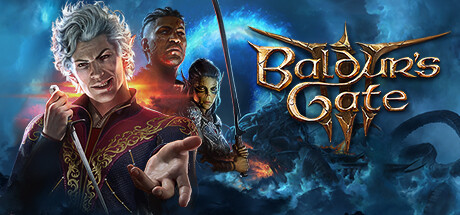
Baldur’s Gate 3 delivers the D&D 5e ruleset with the presentation values of a Naughty Dog game. Turn-based combat with real environmental interactions (grease a floor, cast fire, watch it chain), a party of six recruitable companions each with hours of arc content, and choices that fork branches you’ll never see on a single playthrough. Faerûn is a Sanderson-adjacent world in a specific way: factions (Absolute cult, Emperor, various noble houses) have coherent goals and pushing back against them has costs.
Where it falls short: Act 3 gets heavy on questlines and some players hit fatigue around hour 80. Character creation is deep but forgiving; combat difficulty spikes without warning on Tactician.
Pricing:
- Base game about $59.99
Platforms: Windows, macOS, PS5, Xbox Series
Bottom line: the default starting point for anyone who wants a modern RPG. Buy first, decide next.
2. Divinity: Original Sin 2 — Best for elemental interaction
Divinity: Original Sin 2 is Larian’s previous project, and where they refined the elemental interaction engine that made BG3 sing. Fire ignites oil, water conducts electricity, poison clouds mix with fire for explosive results. The Source magic system has rules — you gain and spend Source points, powerful spells cost a lot, and abusing Source draws hostile attention. Party of four across five acts, all fully voiced.
Where it falls short: first-person camera and older interface show their age. Difficulty is punishing early — some players need to restart after a rough tutorial island.
Pricing:
- Base game about $44.99, frequent sales
Platforms: Windows, macOS, PS4/5, Xbox, Switch, iPad
Bottom line: the deepest turn-based combat on this list. Also the strongest elemental magic.
3. Dragon Age: Inquisition — Best for faction politics
Dragon Age: Inquisition puts you at the head of the Inquisition, a splinter religious-military organization pulled together after an apocalyptic tear opens in the sky. The war table lets you deploy advisors to shift the political map: soothe or antagonize the Chantry, the Templar Order, the mages, the noble courts. Every faction has a coherent political stance that shifts based on world state. Combat is real-time with pause and mixed reviews — either you love it or you switch to tactical camera.
Where it falls short: MMO-style zone padding stretches an already-long game. Ambient dialogue can feel dated. Real-time combat lacks the depth of turn-based peers.
Pricing:
- Base game about $39.99 for Game of the Year edition (includes DLC), often heavily discounted
Platforms: Windows, PS4/5, Xbox
Download: Steam
Bottom line: the pick if political maneuvering is what you loved about Mistborn.
4. Pathfinder: Wrath of the Righteous — Best for deep systems
Pathfinder: Wrath of the Righteous is the most rules-dense RPG on this list. Character creation exposes every knob of the Pathfinder 1e ruleset (feats, subclasses, mythic paths, multiclass), and the ten mythic paths (Angel, Demon, Lich, Trickster, Azata, Aeon, Legend, Swarm, Gold Dragon) fundamentally change what you can do. Real-time-with-pause combat by default; can switch to turn-based mode any time.
Where it falls short: the systems complexity is intimidating. Some encounters demand hardcore rules knowledge to beat on higher difficulties. Bugs at launch were rough — 2026 build is significantly more stable.
Pricing:
- Enhanced Edition about $49.99
Platforms: Windows, macOS, PS4/5, Xbox
Download: Steam
Bottom line: the pick if you want depth of build system to rival Sanderson’s Allomancy metallurgy.
5. Pillars of Eternity II: Deadfire — Best for written faction depth
Pillars of Eternity II: Deadfire is Obsidian at their most literary. Set in an archipelago where four factions (Vailian Trading Company, Royal Deadfire Company, Príncipi pirates, Huana natives) all want the same territory, the game rewards deep engagement with each. Every companion has a real philosophical position and objects to choices that violate it. Combat is real-time with pause or turn-based.
Where it falls short: the sales flop meant no Pillars 3 got greenlit, and some story threads feel like they were meant to continue. Reading load is heavy — this is a book of a game.
Pricing:
- Base game about $29.99, complete edition around $50
Platforms: Windows, macOS, Linux, PS4/5, Xbox, Switch
Bottom line: the pick for readers. Nothing on this list matches the writing quality.
6. The Witcher 3: Wild Hunt — Best for single-character storytelling
The Witcher 3: Wild Hunt is Geralt’s story rather than a party RPG, but the magic system (Signs and alchemical potions) has clean rules, and the political factions (Nilfgaard, Redania, various guilds) are Sanderson-quality in their internal logic. The two expansions, Hearts of Stone and Blood and Wine, are each better than most standalone RPGs.
Where it falls short: solo-only. If party dynamics are important to your enjoyment, this misses that. Older engine sometimes shows in traversal.
Pricing:
- Complete Edition (base + both expansions) about $49.99, frequent sales
Platforms: Windows, macOS, PS4/5, Xbox, Switch
Bottom line: the pick for storytelling. Read the books alongside for extra depth.
7. The Elder Scrolls V: Skyrim — Best for sandbox freedom
Skyrim at 15 years old still holds up because the sandbox is unmatched. Multiple magic schools (Destruction, Restoration, Illusion, Alteration, Conjuration) with clear rules and specializations, faction quests for the Companions, College of Winterhold, Dark Brotherhood, Thieves Guild, Imperial Legion vs Stormcloak civil war — most of these can be completed independently. The mod scene remains the most active in gaming.
Where it falls short: vanilla combat and animations show their age. Faction writing is thinner than newer RPGs on this list. Best experienced with mods.
Pricing:
- Special Edition about $39.99, often heavily discounted
- Anniversary Edition (bigger) about $49.99
Platforms: Windows, macOS (via Wine/CrossOver), PS4/5, Xbox, Switch, VR
Bottom line: the pick for freedom and mod support. The Nordic setting has Sanderson-cousin vibes.
How to pick
- You want the modern gold standard: Baldur’s Gate 3. Nothing else on this list has its combined production value and depth.
- You loved Allomancy’s rules: Divinity: Original Sin 2 for elemental interactions, or Pathfinder for deepest systems.
- You loved the Well of Ascension politics: Dragon Age: Inquisition or Pillars of Eternity II.
- You want the best writing: Pillars of Eternity II: Deadfire, hands down.
- You want a single hero story: The Witcher 3. Read the books alongside.
- You want to disappear for six months: Skyrim modded. Nothing else offers that time sink.
FAQ
Is there a Mistborn game? No official Mistborn video game exists. A mobile app called Mistborn: Birthright was announced years ago and never released. The RPGs on this list are the closest analogs.
What RPG has the best magic system? For rule depth: Pathfinder: Wrath of the Righteous. For interaction density: Divinity: Original Sin 2. For narrative integration: The Witcher 3.
Which of these runs on Steam Deck? Baldur’s Gate 3, Divinity: Original Sin 2, Pillars of Eternity II, The Witcher 3, and Skyrim all play well on Steam Deck. Dragon Age: Inquisition and Pathfinder: Wrath of the Righteous work but with more configuration.
What is the best cheap Mistborn-style RPG? Divinity: Original Sin 2 and Pillars of Eternity II both frequently drop under $15 on sale. Skyrim Special Edition falls to $10.
How long is the Mistborn movie taking? Brandon Sanderson’s first-draft script has been announced as complete in 2026. Production timelines will follow. In the meantime, the seven picks here cover the “hard magic + political intrigue” itch.