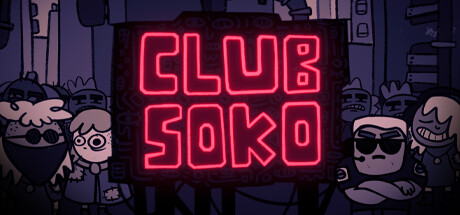
Club Soko alternatives for desktop exist because Club Soko itself is so good at what it does: wrapping sokoban puzzle mechanics in atmospheric noir storytelling. You play as Maude, a graffiti artist moving through an underground nightclub, slipping past bouncers and partygoers while pushing crates to uncover the venue’s secrets. The puzzle rules stay true to sokoban’s core (push objects onto marked targets, never pull), but the nightclub setting and narrative frame turn box-pushing into something that feels like detective work. If Club Soko has you hooked and you want more desktop sokoban alternatives that capture similar brain-burn without repeating the same mystery, this list covers seven options worth your time.
Quick comparison table
| App | Best for | Free plan | Starting price | Standout feature |
|---|---|---|---|---|
| Patrick’s Parabox | Puzzle perfectionists | No | $20 | Recursive puzzle-in-puzzle design |
| Baba Is You | Lateral thinking | No | $15 | World-rewriting rule puzzles |
| Chronigma | Speed solvers | No | $10 | Real-time time-loop sokoban |
| Linelith | Minimalists | Yes | $5 | Monochrome line-pushing |
| Handshakes | Tactile players | No | $10 | Gesture-based movement |
| Poke ALL Toads | Casual audiences | No | $15 | Frog-positioning charm |
| Sokobond Express | Puzzle variety seekers | No | $15 | Rapid-fire level chains |
What makes Club Soko work
Club Soko’s strength lies in pairing sokoban mechanics with a coherent visual and narrative identity. The nightclub setting gives each puzzle room context. You are not solving abstract boxes; you are infiltrating a specific place. The soundtrack and retro arcade aesthetic filtered through neon make puzzle-solving feel like infiltration rather than abstract play.
The core appeal is sensory: the satisfying click of crate movement, the careful planning to avoid dead ends. Club Soko offers no hints or undo button; one misstep locks you into restart. This design builds focus. The difficulty curve introduces new mechanics (ice patches, moving bouncers) without overwhelming, and the narrative wrapper transforms box-pushing into purposeful exploration through a living space.
The alternatives
Patrick’s Parabox
Patrick’s Parabox is a game about boxes containing boxes containing more boxes. Each puzzle wraps you inside nested layers: solve a box puzzle, step inside that box, solve another puzzle within it, then zoom back out. The recursive structure creates remarkable variety from simple rules.
Where it falls short: The difficulty spike after the first hour is steep, and the recursive structure can overwhelm players used to linear progressions. The abstract visual style (colored boxes) lacks Club Soko’s atmosphere.
Pricing: Paid
Platforms: Windows, macOS, Linux
Download: Steam
Bottom line: For puzzle purists who want mind-bending depth over story.
Baba Is You
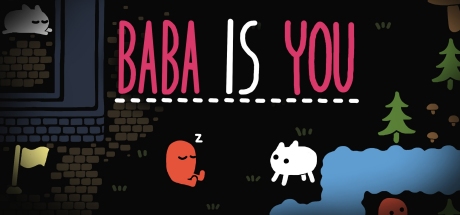
Baba Is You inverts sokoban by letting you rewrite the rules. Push word-objects around the screen to change what “is” and what “win” means. Move “Stop” next to “Wall” and walls stop blocking you; move “Baba” next to “Push” and Baba becomes pushable. Every puzzle is a rule-writing challenge.
Where it falls short: The word-based language takes time to learn, and early confusion frustrates players expecting traditional box-pushing. No tutorials exist; discovery is the teaching method, and some puzzles feel more like code than play.
Pricing: Paid
Platforms: Windows, macOS, Linux
Download: Steam
Bottom line: For players who want puzzles that surprise and challenge assumptions.
Chronigma
Chronigma blends sokoban with time loops. Solve puzzles in real time as the environment shifts: platforms move, obstacles phase in and out, and the clock never stops. The pressure to solve while the world rearranges makes every second count. It is sokoban designed for speedrunners.
Where it falls short: Real-time pace rules out careful planning. If you prefer methodical, untimed puzzle-solving, Chronigma’s constant motion will feel stressful rather than engaging.
Pricing: Paid
Platforms: Windows, macOS
Download: Steam
Bottom line: For adrenaline seekers who want sokoban mixed with action urgency.
Linelith
Linelith strips sokoban down to its essence: a single colored line on a monochrome canvas. Push the line through minimal mazes to reach the goal. The visual minimalism removes all distraction, leaving only puzzle logic. It is what remains when you delete everything except the puzzle.
Where it falls short: The minimal aesthetic, while elegant, can feel cold and repetitive. No narrative motivation or atmosphere exists: just you and the puzzle. Extended play can feel boring.
Pricing: Free
Platforms: Windows, macOS
Download: Steam
Bottom line: For meditation-minded players who want pure puzzle with zero fat.
Handshakes
Handshakes reimagines sokoban as a gesture language. Guide characters to overlap and “handshake” in specific positions using touch or mouse swipes. It is sokoban translated into tactile choreography. The physicality of the controls creates an intimate connection between player and puzzle.
Where it falls short: Handshakes is Windows-only and performs better with touch than mouse. Desktop players on other platforms have no access, and mouse control can feel imprecise.
Pricing: Paid
Platforms: Windows
Download: Steam
Bottom line: For players who value tactile control and want puzzles that feel like dancing.
Poke ALL Toads
Poke ALL Toads applies sokoban logic to frog positioning. Push adorable toads into target locations on bite-sized puzzle boards. The charm and personality make the mechanical challenge feel lighter and more playful than Club Soko’s noir tone. These are puzzles you solve with a smile.
Where it falls short: Puzzle difficulty caps early; many players solve the entire game in hours without getting stuck. The whimsy that attracts players can also make the game feel slight compared to meatier alternatives.
Pricing: Paid
Platforms: Windows, macOS
Download: Steam
Bottom line: For casual players and families who want a charming, low-stakes experience.
Sokobond Express
Sokobond Express keeps sokoban core rules but packages the game as rapid-fire puzzle chains. Solve one level, immediately start the next: no story, no atmosphere, just a constant stream of fresh puzzles. It is designed for players who want breadth over narrative depth.
Where it falls short: The parade-like structure (level after level with little variation in theme or pacing) can feel exhausting. Without narrative motivation, it is easy to quit mid-session. The game demands you find fun in the puzzles alone.
Pricing: Paid
Platforms: Windows, macOS
Download: Steam
Bottom line: For puzzle enthusiasts who want quantity and variation over story.
How to choose
Story and innovation matter: Patrick’s Parabox or Handshakes combine narrative with fresh mechanics.
You want speed and intensity: Chronigma or Sokobond Express merge puzzles with action-game pacing.
Puzzles should be maximally weird: Baba Is You rewrites every assumption about what a sokoban game can be.
Budget or minimalism appeals: Linelith is free and distills sokoban to pure logic.
Charm and accessibility matter: Poke ALL Toads offers low-pressure puzzling with personality.
FAQ
What is Club Soko?
Club Soko is a sokoban puzzle game released in 2025 on Steam. It wraps box-pushing mechanics in a nightclub infiltration narrative where you play as Maude, a graffiti artist uncovering the venue’s secrets. The blend of classic sokoban rules and atmospheric storytelling attracted players who wanted more than abstract puzzles.
Is Club Soko a sokoban game?
Yes. Club Soko follows sokoban rules exactly: you push (never pull) objects onto marked target locations. The nightclub setting and narrative are the twist; the core puzzle logic is sokoban.
What is the best sokoban game on Steam?
That depends on what you value. Club Soko is best for atmosphere and narrative blend. Patrick’s Parabox is best for mechanical innovation. Baba Is You is best for lateral thinking. There is no single “best”—each excels at different things.
Is Baba Is You harder than Club Soko?
Baba Is You is conceptually harder because its rule-rewriting system requires different thinking than spatial planning. Club Soko is spatially harder: one wrong move means failure. Both are challenging, but in different ways.