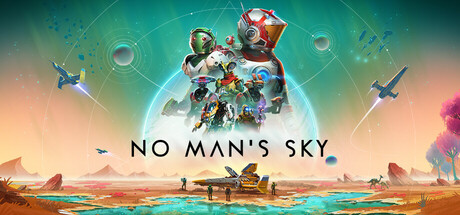
No Man’s Sky turned 10 this month, and Hello Games’ decade of free updates has left the game closer to its original pitch than anyone in 2016 dared expect. Base building, expeditions, freighters, seasonal events, and a genuine multiplayer layer all sit on top of the procedural universe the launch promised. Still, ten years is ten years, and even the most patient explorer wants a change of skybox sometimes. If you’ve clocked hundreds of hours across every biome and want somewhere new to point a ship, here are seven desktop No Man’s Sky alternatives that keep the same infinite-horizon feeling.
Quick comparison table
| App | Best for | Free plan | Starting price | Standout feature |
|---|---|---|---|---|
| Elite Dangerous | Realistic 1:1 galaxy | No | $30 | Full Milky Way at real scale |
| Starfield | Story-first space RPG | No | $70 | Bethesda quest structure |
| X4: Foundations | Fleet building economy | No | $50 | Deep station economy |
| Space Engineers | Voxel ship construction | No | $20 | Physics-based building |
| Astroneer | Chill terrain shaping | No | $30 | Cozy co-op exploration |
| Outer Wilds | Puzzle solar system | No | $25 | 22-minute time loop |
| The Planet Crafter | Solo terraforming | No | $25 | Watch a planet come alive |
Why No Man’s Sky sticks
The universe is genuinely huge. 18 quintillion procedurally generated planets, and the update pipeline has made most of them worth landing on. Biomes now include lush megafauna worlds, cave networks, deep ocean systems, and irradiated wastes with weather that will actually kill you. The variety carries a long-tail feeling that most sandbox games lose after a few dozen hours.
Progression finally has shape. The original launch felt aimless; the modern game has expedition arcs, freighter management, capital fleet combat, and a settlement layer that gives you long-term projects between exploration runs. You can pick a goal and work toward it without inventing your own headcanon.
Multiplayer is quietly excellent. Drop-in visits to friends’ bases, shared expeditions, and the Nexus hub give the game a warmth most persistent-universe sims miss. Ambient co-op is the mode most people end up in, and it works because there are no meaningful power gaps.
The alternatives
Elite Dangerous
Elite Dangerous is No Man’s Sky’s opposite twin. Same infinite universe, only Frontier built theirs from real Milky Way survey data at 1:1 scale, which means every star exists where NASA says it does. The exploration loop trades painterly biomes for realism, silence, and long jump chains between systems that reward patience.
Where it falls short: The learning curve is steep, and Odyssey’s on-foot content is thinner than expected. Combat is deep but demands a HOTAS to enjoy properly.
Pricing: Paid ($30, Horizons expansion included; Odyssey usually bundled during sales).
Platforms: Windows.
Download: Steam
Bottom line: Pick this if you want the same infinite universe but with real astronomy and a serious flight sim underneath.
Starfield
Starfield is what happens when Bethesda points its RPG engine at space. Story quests, faction arcs, ship customization, planet surveys, and the studio’s usual mountain of loot fill the gaps between star systems. Loading screens interrupt the fantasy of seamless flight, but the writing and encounter design carry more weight than either.
Where it falls short: Planet exploration is thinner than it looks in trailers; most surface content is procedural filler. Loading transitions break the immersion No Man’s Sky nails.
Pricing: Paid ($70; Shattered Space DLC $30).
Platforms: Windows.
Download: Steam
Bottom line: For the players who wanted a proper space RPG with named quests, not open-ended exploration.
X4: Foundations
X4: Foundations is the deepest space economy game running on PC. Build stations, run trade fleets, manage factions, and end up commanding a corporate empire. If No Man’s Sky’s freighter layer was the part you loved most, X4 is that layer expanded into an entire game.
Where it falls short: The UI is a wall of menus, and the first ten hours are essentially a tutorial. Combat is functional, never thrilling.
Pricing: Paid ($50; expansions often bundled).
Platforms: Windows, Linux.
Download: Steam
Bottom line: Pick this if you want to run a shipping empire and don’t mind spreadsheets in space.
Space Engineers
Space Engineers is voxel-based ship and station construction with real physics. Build a freighter that actually breaks apart under stress, then take it into survival mode where oxygen and gravity matter. Multiplayer servers run everything from creative sandboxes to full PvP economies.
Where it falls short: Performance can dip on larger servers with heavy ship counts. The learning curve for realistic power and thermal systems is real.
Pricing: Paid ($20).
Platforms: Windows.
Download: Steam
Bottom line: For the builders who spent most of No Man’s Sky’s late-game time on base architecture.
Astroneer
Astroneer is the cozy alternative. Cartoon planets, colourful terrain deformation, and drop-in co-op with friends who might not otherwise touch a survival game. The tone is inviting, the systems are shallower than X4 or Space Engineers, and the game lets a whole session pass without a single hostile encounter.
Where it falls short: Content depth is thinner than the survival crowd wants. Late-game feels short compared to No Man’s Sky.
Pricing: Paid ($30).
Platforms: Windows.
Download: Steam
Bottom line: Best for a chill evening with friends who bounce off harder survival games.
Outer Wilds
Outer Wilds is a completely different pitch and still belongs here. A single hand-built solar system, a 22-minute time loop, and a set of secrets you unravel by observing and remembering. Nothing in the space genre delivers a sense of discovery like Outer Wilds does when the pieces finally click.
Where it falls short: Short if you know the answers already. Motion sickness during zero-g sequences is a real complaint.
Pricing: Paid ($25; Echoes of the Eye DLC $15).
Platforms: Windows, macOS.
Download: Steam
Bottom line: Pick this if what you loved about No Man’s Sky was the moment you first saw an alien ruin and wondered what happened.
The Planet Crafter
The Planet Crafter hands you a barren world and asks you to make it liveable. Raise the atmosphere, seed oceans, plant biomes, and eventually watch animals arrive. Solo or co-op, it turns terraforming into a decades-long project you can measure minute by minute.
Where it falls short: No combat; some players find the pacing slow past the first ocean. Story is minimal.
Pricing: Paid ($25).
Platforms: Windows.
Download: Steam
Bottom line: For the players who cared more about the planets than the ships.
How to choose
Pick Elite Dangerous if you want the same infinite universe rendered with real astronomy. Pick Starfield if you want a proper Bethesda RPG in space and can tolerate loading screens. Pick X4 if you loved managing freighters and want to run an entire supply chain. Pick Space Engineers if base building was your true endgame. Pick Astroneer for cozy co-op evenings. Pick Outer Wilds if the sense of discovery was what pulled you in. Pick The Planet Crafter if you want to sit with a single world and change it. Stay on No Man’s Sky if the exact mix of exploration, freighter management, and multiplayer expeditions is what you love, because none of these do all three at once.
FAQ
What is the biggest game like No Man’s Sky?
Elite Dangerous covers the entire Milky Way at real scale, roughly 400 billion star systems. Nothing else in the genre is bigger. No Man’s Sky’s 18 quintillion planets are larger on paper but procedurally generated rather than surveyed.
Is Starfield better than No Man’s Sky?
Different games with the same setting. Starfield is a story-driven RPG with hand-authored quests; No Man’s Sky is an open-ended sandbox with a live-update model. Starfield has richer writing; No Man’s Sky has better exploration flow.
What is the best free No Man’s Sky alternative?
Elite Dangerous has offered its base game free during promotional windows, and the Space Engineers demo covers the core loop. For a permanently free option, look at Space Station 14 or the original EVE Online client, though both are further from the No Man’s Sky feel.
Does Outer Wilds run on Mac?
Yes, Outer Wilds has a native macOS build on Steam. It’s one of the few space games on this list that does.
What game is like No Man’s Sky but single-player only?
The Planet Crafter and Outer Wilds are both entirely single-player. Astroneer supports both solo and co-op cleanly.