Polygon’s report on The Sims 4’s next update covers a promise the series has made before: Sims that act on their own instead of standing in a puddle they made themselves. The September 2026 patch reworks routing and need-driven decisions so households feel less like puppets and more like people. It is a real improvement, and it lands on top of a decade of paid packs that many players have already stopped buying.
That combination, a genuinely better base game bolted onto a pricing model people are tired of, is why searches for Sims 4 alternatives keep climbing. This list covers seven PC games worth trying instead: two direct life-sim rivals racing to fill the gap, a handful of management and colony sims that borrow pieces of the formula, and one farming game that solves the same itch from a different angle. Every pick runs on Windows or macOS, ranked by how close it gets to what made The Sims worth playing in the first place.
Quick comparison
| Game | Best for | Cost | Standout | Where to buy |
|---|---|---|---|---|
| Paralives | Closest direct Sims rival | $39.99 (early access) | Build mode combined with a full city builder | Steam |
| inZOI | Photorealistic life sim | $39.99 (early access) | Unreal Engine visuals and AI-driven Smart Zoi behavior | Steam |
| Two Point Museum | Management sim adjacency | $29.99 | Exhibit curation with the studio’s signature humor | Steam |
| Tiny Life | Cheapest full release | $14.99 | Isometric build mode, no early access wait | Steam |
| My Time at Sandrock | Life sim with crafting | $39.99 | Town rebuilding tied to a real crafting economy | Steam |
| Rimworld | Colony sim depth | $34.99 | Emergent storytelling from AI-directed events | Steam |
| Stardew Valley | Life sim through farming | $14.99 | Ten years of free content updates | Steam |
Why long-time Sims 4 players look for alternatives
The pack economy is the biggest complaint. Buying every expansion, game, and stuff pack released since 2014 costs more than most PC games’ entire back catalogue combined, and the base game still feels thin without them. Players on Reddit routinely point out that core features from The Sims 2 and 3, like open worlds and toddlers with real personalities, took years to reappear and arrived split across separate paid releases.
Mod fragility is the second recurring gripe. A patch that fixes routing can also break Script Mods that took months to build, and Custom Content creators frequently have to re-upload entire libraries after a base-game update. That fatigue got worse when EA quietly shelved Project Rene, the codename for what many assumed would become The Sims 5, and pushed resources back into The Sims 4 instead. Paradox’s own attempt at a Sims killer, Life By You, fared worse: the studio cancelled it outright in June 2024 and shut down Paradox Tectonic days later, proof that dethroning The Sims 4 is hard even with a well-funded team behind it.
Autonomy is the third issue, and it is the one Polygon’s piece addresses directly. Sims routing into walls, ignoring hungry toddlers, or getting stuck mid-task has been a running joke since launch. The September 2026 update genuinely improves it, but ten years of similar promises have made some players want to see how other studios solve the same problem instead of waiting for the next patch.
The alternatives
Paralives: closest direct Sims rival
Paralives entered Steam early access in May 2026 after seven years of development, and it sold a quarter million copies in its first eight hours. Build mode uses a grid-free system that lets players place walls, furniture, and terrain at any angle, and the city-builder layer lets a household’s home sit inside a town the player also shapes.
Where it falls short: Early access means a shorter content list than The Sims 4 ships with today: fewer careers, fewer life stages, and no toddlers yet. Performance dips on larger lots.
Pricing: $39.99 for early access, roughly what one Sims 4 expansion pack costs, with the developer promising free content updates through the two-year road to version 1.0.
Migrating from The Sims 4: The household-first structure carries over directly, and the build tools will feel familiar within an hour. Custom Content and Script Mods do not transfer; Paralives has its own Steam Workshop instead.
Download: https://store.steampowered.com/app/1118520/Paralives/
Bottom line: Pick Paralives if free-form building matters more to you than a deep content list right now.
inZOI: photorealistic life sim
inZOI launched into early access in March 2025 from Krafton, the PUBG publisher, and it sold over a million copies in its first week. The Unreal Engine visuals are the headline, but the Smart Zoi AI system, which lets characters react to their surroundings and each other without direct input, is the feature that actually addresses the autonomy complaint players have about The Sims 4.
Where it falls short: High system requirements shut out older laptops. The tone leans dramatic and cinematic rather than the light, cartoonish feel longtime Sims players expect.
Pricing: $39.99 for early access, with all updates and DLC free until the 1.0 release.
Migrating from The Sims 4: Household management and build mode both map closely to what Sims players already know. Mods are supported through Krafton’s own modding tools rather than anything imported from The Sims.
Download: https://store.steampowered.com/app/2456740/inZOI/
Bottom line: Pick inZOI if visual fidelity and smarter background behavior matter more to you than a cartoon art style.
Two Point Museum: management sim adjacency
Two Point Museum trades household simulation for curation: build exhibit halls, hire staff, and keep dinosaur skeletons and haunted paintings from scaring off paying visitors. It carries the same sharp, British sitcom writing that made Two Point Hospital a cult favorite, and the building tools scratch a similar itch to The Sims 4’s build mode.
Where it falls short: There is no household or relationship system at all. Readers who want to simulate a life, not just a business, will bounce off this one fast.
Pricing: $29.99, cheaper than most Sims 4 expansion packs.
Migrating from The Sims 4: Build mode instincts transfer well; the household and story-driven side of Sims does not exist here. Treat it as a spinoff genre rather than a replacement.
Download: https://store.steampowered.com/app/2185060/Two_Point_Museum/
Bottom line: Pick Two Point Museum when you want The Sims 4’s building satisfaction without the life-simulation half.
Tiny Life: cheapest full release
Tiny Life is a one-developer, isometric life sim that shipped as a full release rather than staying in early access for years. It covers the basics well: household needs, careers, relationships, and a build mode that supports rotating walls and custom room shapes.
Where it falls short: The scope is small next to a decade of Sims 4 content. Solo development means updates arrive slower than at a bigger studio.
Pricing: $14.99, the cheapest full game on this list.
Migrating from The Sims 4: Household structure and the day-to-day needs loop feel immediately familiar. Build mode supports Steam Workshop content, though nothing from The Sims itself carries over.
Download: https://store.steampowered.com/app/1651490/Tiny_Life/
Bottom line: Pick Tiny Life when you want a finished, budget-friendly life sim instead of another early access wait.
My Time at Sandrock: life sim with crafting
My Time at Sandrock puts a household of one at the center of a desert town that needs rebuilding, mixing farming, crafting, and relationship systems with a real workshop economy. It swaps The Sims 4’s free-roaming household management for a structured story about restoring a settlement, but the relationship and home-decorating systems land close to the same audience.
Where it falls short: No multi-Sim household to manage; the game is built around a single character. The crafting economy has a learning curve that life-sim fans coming straight from The Sims 4 may not expect.
Pricing: $39.99, with frequent seasonal discounts on Steam.
Migrating from The Sims 4: Home decoration and relationship-building carry over conceptually, but the crafting and commission systems are new territory. Budget extra time to learn the economy loop.
Download: https://store.steampowered.com/app/1084600/My_Time_at_Sandrock/
Bottom line: Pick My Time at Sandrock if you want relationship and home-building systems wrapped in a crafting game rather than a pure life sim.
Rimworld: colony sim depth
Rimworld replaces one household with a whole colony, and its AI Storyteller generates raids, weather, and events that create the kind of emergent, retellable stories Sims players chase when they build elaborate scenarios by hand. It has stayed one of Steam’s most consistently played strategy games since leaving early access.
Where it falls short: No decoration-focused build mode and no romance-driven storytelling in the Sims sense. The learning curve is steep, and the pixel art will not appeal to players who want The Sims 4’s polish.
Pricing: $34.99, with an active mod scene that adds hundreds of hours for free.
Migrating from The Sims 4: The needs-and-relationships layer between colonists is the closest analogue to Sims household dynamics. Mod support is extensive and, unlike The Sims 4, mods rarely break between updates.
Download: https://store.steampowered.com/app/294100/RimWorld/
Bottom line: Pick Rimworld when you want The Sims 4’s emergent chaos turned into a genuine survival strategy game.
Stardew Valley: life sim through farming
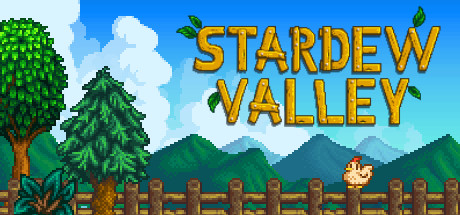
Stardew Valley covers the life-sim fantasy from an angle The Sims 4 never fully commits to: a slower, seasonal rhythm built around a farm, a town full of neighbors to befriend or marry, and a house you renovate room by room over years of play. Ten years after launch, its solo developer still ships free content updates.
Where it falls short: No free-form build mode comparable to The Sims 4, and the pixel-art presentation is a deliberate trade-off for scope, not a limitation of budget.
Pricing: $14.99, with zero paid expansions in a decade on the market.
Migrating from The Sims 4: Relationship building, home upgrades, and a day-to-day routine all transfer conceptually. What does not transfer is build-mode freedom; Stardew’s house upgrades follow a fixed path rather than open design.
Download: https://store.steampowered.com/app/413150/Stardew_Valley/
Bottom line: Pick Stardew Valley when you want the life-sim rhythm without ever buying another expansion pack again.
How to choose
Pick Paralives if what you actually want is The Sims 4 rebuilt from scratch with better tools and no packs to buy yet. It is the closest match, and the early access limitations are the kind that improve with each update.
Pick inZOI if visual fidelity and smarter background behavior are worth a heavier system requirement. Pick Tiny Life if you want something finished today for the price of a single Sims 4 stuff pack.
Pick Two Point Museum or My Time at Sandrock if the life-sim label matters less to you than good building tools or a crafting economy wrapped around relationships. Pick Rimworld if what you actually enjoyed in The Sims was the chaos, not the decorating, and you want that chaos to have real stakes. Pick Stardew Valley if you want the rhythm of a simulated life without ever thinking about a store page again.
Stay with The Sims 4 if your household, mod list, and years of saved lots matter more than starting over, and give the September 2026 autonomy update a real chance before switching. No alternative on this list replicates a decade of accumulated content, and none of them need to.
FAQ
Is Paralives better than The Sims 4?
Not yet, and it does not claim to be. Paralives is in early access with a smaller feature set than a ten-year-old game, but its build mode and city-builder integration already go further than The Sims 4 in those specific areas.
Can Sims 4 households be imported into another life sim?
No. None of the games on this list read Sims 4 save files, Custom Content, or Script Mods. Households, lots, and mods have to be rebuilt from scratch in whichever alternative a player picks.
What happened to Life By You, the other Sims competitor?
Paradox cancelled Life By You in June 2024, after three missed release dates, and closed the Paradox Tectonic studio behind it days later. It never reached a public release and is not available to buy.
What is the cheapest Sims 4 alternative?
Stardew Valley and Tiny Life both sell for $14.99, and neither has any paid expansions to add on top. Stardew Valley has shipped free content updates for a decade instead.
Will The Sims 4’s September 2026 update fix its autonomy problems for good?
It is a real improvement to routing and need-driven decisions, according to Polygon’s reporting, but EA has promised autonomy fixes before. Judge it by playing a few in-game weeks rather than the patch notes alone.
Is inZOI a full replacement for The Sims 4?
Not for everyone. inZOI’s photorealistic art style and heavier system requirements suit players who want more visual fidelity, but its early access build has less content than The Sims 4’s decade-long catalogue.