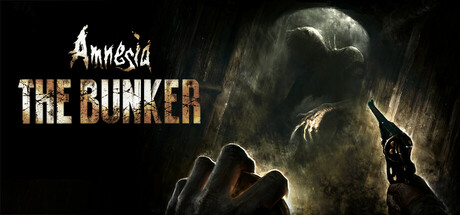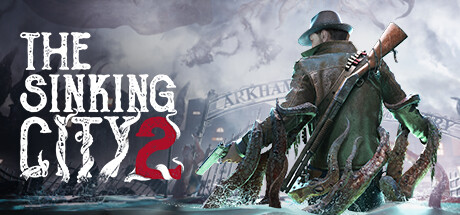
The Sinking City 2 just launched, and Eurogamer already has hands-on coverage up, so a lot of people are circling back to the first game and finding it a rough sit in 2026. Slow driving, repetitive combat, and a case system that mostly boils down to “walk to the next marker” have not aged well. That is why we pulled together seven The Sinking City alternatives on desktop that keep what people actually liked about Oakmont — the Lovecraftian dread, the paper trail investigations, the sense of a whole rotting town to poke at — and drop the parts that made the original a chore.
Every pick here runs on Windows via Steam. Most also ship native or verified builds for the Steam Deck. We stuck to games that are still supported, still get patched, and still show up in current recommendations on the r/Lovecraft, r/HorrorGaming, and r/patientgamers threads, so nothing on this list is abandonware.
Quick comparison
| Game | Best for | Free demo | Steam price (USD) | Standout feature |
|---|---|---|---|---|
| Call of Cthulhu (2018) | The closest tonal match | No | About $30 | Sanity meter that changes what you see |
| Sherlock Holmes Chapter One | Same open-world detective loop, tighter | No | About $45 | Frogwares’ newer, better investigation system |
| Amnesia: The Bunker | Pure dread over investigation | Yes | About $25 | Semi-open sandbox with one persistent monster |
| Return of the Obra Dinn | Deduction without hand-holding | Yes | About $20 | The logbook you actually have to fill in yourself |
| Disco Elysium | Detective work as a role-play system | No | About $40 | 24 internal skills argue with you in real time |
| Darkwood | Top-down cosmic horror | Yes | About $15 | Procedural Slavic-folk-horror map |
| Stygian: Reign of the Old Ones | Lovecraftian party RPG | No | About $30 | Full Chaosium-style Sanity and belief systems |
Why people bounce off The Sinking City
Search intent for “The Sinking City alternatives” has spiked with the sequel’s release, and the complaints in Steam reviews and Reddit threads keep landing on the same three things.
The pace of the open world
Oakmont is a big flooded city and you spend a lot of it in a rowboat or on foot with no fast-travel until you unlock phone booths. Players call it “atmospheric for the first four hours, tedious for the next twenty.” Cases send you back and forth across districts you have already cleared.
The combat
Third-person shooting against Lovecraftian creatures is the weakest part of the game. Ammo is scarce on purpose, but the encounters are frequent enough that people stop feeling threatened and start feeling annoyed. Users on Reddit routinely recommend dropping to easy just to get through fights and back to the investigation.
The investigation loop
Frogwares’ “Mind Palace” is a great idea, but the follow-up in the original Sinking City is thin. You gather clues, pick the right conclusion from two or three options, and the game moves on. Newer detective games either give you a real logbook (Obra Dinn) or a real deduction system (Sherlock Holmes Chapter One) and it shows.
If any of those three hit you, one of the seven below will fix it.
The alternatives
Call of Cthulhu (2018) — Best for the closest tonal match
Call of Cthulhu from Cyanide Studio is the direct tonal cousin. You play private investigator Edward Pierce on Darkwater Island, and the whole game is a slow burn through Lovecraft’s playbook: a missing artist, a cult you keep almost seeing, and a sanity meter that changes what shows up on screen. It is linear rather than open world, which is exactly why some Sinking City players prefer it.
Where it falls short: The last third leans on stealth sequences that feel bolted on, and the endings are decided by a small number of choices rather than a full branching system.
Pricing:
- Free: No demo on Steam.
- Paid: Around $30 at full price, regularly discounted well below that in Steam sales.
- vs The Sinking City: Comparable list price, roughly a third of the length, much tighter pacing.
Migrating from The Sinking City: No save transfer, obviously, but the Mind Palace concept is here in a simpler form (“Reconstructions”) and the writing hits similar Frogwares-y beats. If you liked interrogating Oakmont locals, you will be at home talking to the residents of Darkwater.
Download: Steam
Bottom line: Pick this if you want another Lovecraftian detective story without the open-world padding. Skip it if the linear structure is exactly what you did not want.
Sherlock Holmes Chapter One — Best for the open-world detective loop, done better
Sherlock Holmes Chapter One is Frogwares’ other open-world detective game, and it is what The Sinking City wanted to be. Young Sherlock returns to the fictional Mediterranean island of Cordona to investigate his mother’s death. The map is smaller, denser, and full of side cases that use the same “gather clues, cross-reference, pick a conclusion” loop, only the loop is deeper: you disguise yourself, you tail suspects, you pick a moral verdict at the end of each case.
Where it falls short: Combat is still Frogwares’ weakest muscle, and the open-world traversal is faster than Oakmont but still uses the “walk to the next marker” pattern.
Pricing:
- Free: No standalone demo, though a free prologue chapter has been offered during Steam events.
- Paid: Around $45 at full price, often 60 to 75 percent off in sales.
- vs The Sinking City: Pricier at MSRP, but the investigation system is a clear generation ahead.
Migrating from The Sinking City: Same studio, same core mechanic, mostly better execution. If you liked pinning notes on Oakmont’s walls, Chapter One’s evidence board is the same idea with more moving parts. Cordona also runs at a much better framerate on the same hardware.
Download: Steam
Bottom line: Pick this if what you liked about The Sinking City was the detective work. It is the direct sequel to that feeling in everything but name.
Amnesia: The Bunker — Best for pure dread
Amnesia: The Bunker is Frictional Games at their tightest. You are a French soldier trapped in a First World War bunker with one monster that lives in the vents and learns your patterns. The whole game takes place in a small, semi-open map you can approach in any order, and a wind-up generator powers the lights. When it runs down, the dark is real and the monster comes out.
Where it falls short: No investigation, no case files, no Mind Palace. This is horror-first, and if you came to The Sinking City for the mystery rather than the mood, The Bunker will feel one-note.
Pricing:
- Free: A demo is available on Steam.
- Paid: Around $25 at full price.
- vs The Sinking City: Cheaper, shorter (about eight to twelve hours), and much scarier moment to moment.
Migrating from The Sinking City: Nothing transfers, but the “small town full of secrets” feel becomes “small bunker full of secrets,” and the puzzle-solving replaces case-solving. If you played The Sinking City with the volume up and the lights off, this is your next stop.
Download: Steam
Bottom line: Pick this if the atmosphere was the whole point. Skip it if you want a talking, deducting protagonist.
Return of the Obra Dinn — Best for deduction without hand-holding
Return of the Obra Dinn is Lucas Pope’s one-man project about identifying every soul on a merchant ship that came back to port empty. You use a pocket watch that shows you the moment of each crewmember’s death, and a logbook that you fill in yourself. The game verifies your answers in batches of three, which means it never tells you if any single guess is right.
Where it falls short: The 1-bit visual style is a wall for some players. There is no combat, no traversal, no leveling. If you need those things, this is not it.
Pricing:
- Free: A short demo is on Steam.
- Paid: Around $20 at full price, and this one goes on sale often.
- vs The Sinking City: A quarter of the length, half the price, and the deduction system is the best in the genre.
Migrating from The Sinking City: If the best hour of The Sinking City for you was the moment where you pinned three clues together in the Mind Palace and got a name, Obra Dinn is six to ten hours of that hour. It expects you to keep a paper notebook next to your keyboard.
Download: Steam
Bottom line: Pick this if you want to feel like a detective, not play as one. Skip it if presentation matters more to you than mechanics.
Disco Elysium — Best for detective work as an RPG
Disco Elysium is not horror and does not pretend to be, but it deserves a spot here because it solves a problem The Sinking City could not: how to make an investigation feel like it belongs to you. You play a burned-out cop with amnesia in the failed city of Revachol, and your personality is a party of 24 internal skills that argue with you, lie to you, and occasionally solve the case for you. The tonal overlap with The Sinking City is the sense of a wet, rotten place with a long memory.
Where it falls short: Zero combat and a lot of reading. Some players call it a novel with dice, and mean it as a warning.
Pricing:
- Free: No demo on Steam.
- Paid: The Final Cut is around $40, with steep discounts every few months.
- vs The Sinking City: Comparable list price, twice the writing quality, none of the shooting.
Migrating from The Sinking City: The overlap is the “detective in a strange, decaying city” premise. If Oakmont’s world-building was what kept you playing, Revachol will hold you longer, and Kim Kitsuragi is one of the best partners any detective game has written.
Download: Steam
Bottom line: Pick this if what you loved was the world and the writing. Skip it if you cannot get past the fact that you will spend twenty minutes talking to a corpse.
Darkwood — Best for top-down cosmic horror
Darkwood is a top-down survival horror set in a Slavic forest that is slowly going wrong. Days are for exploring and gathering, nights are for barricading a hideout and hoping. The map is procedurally arranged inside a hand-crafted region layout, so no two runs put the same house in the same place. The Lovecraftian angle is subtler than The Sinking City’s, but it is there in the way the forest keeps changing when you are not looking.
Where it falls short: The top-down camera hides some of the horror, and the crafting loop can grind if you play cautiously. Combat is deliberately clumsy.
Pricing:
- Free: A demo is on Steam.
- Paid: Around $15 at full price.
- vs The Sinking City: A third of the price, similar playtime, completely different perspective.
Migrating from The Sinking City: The overlap is atmosphere and dread, not mechanics. If Oakmont’s flooded streets were the best part, Darkwood’s forest at night gives you the same “somewhere in this map, something is wrong” feeling with tighter design.
Download: Steam
Bottom line: Pick this if you want a different angle on the same dread. Skip it if the top-down view or the survival loop turns you off.
Stygian: Reign of the Old Ones — Best for a full Lovecraftian RPG
Stygian: Reign of the Old Ones is a party-based CRPG set in Arkham after the stars have already come right. The city has been pulled into a purple-tinted nowhere and the survivors are trying to figure out why. It uses a Sanity system straight out of Chaosium’s Call of Cthulhu tabletop game, plus a Belief stat that decides which endings are even available to you.
Where it falls short: The combat encounters are the weakest part, and the game ends on what feels like an act break rather than a full ending. A sequel-slash-expansion has been in development, but do not go in expecting a fully resolved arc.
Pricing:
- Free: No demo on Steam.
- Paid: Around $30 at full price.
- vs The Sinking City: Comparable price, much deeper stat and dialogue systems, much lighter on action.
Migrating from The Sinking City: The overlap is the source material. If you liked how The Sinking City handled Sanity as a stat, Stygian handles it as an entire subsystem, with Belief archetypes (Rationalist, Nihilist, Materialist and so on) that change what characters say to you.
Download: Steam
Bottom line: Pick this if you want Lovecraft-as-tabletop with real character sheets. Skip it if unfinished-feeling endings are a dealbreaker.
How to choose
Pick Call of Cthulhu (2018) if you want the shortest, cleanest tonal match. It is the “if you liked The Sinking City, try this next” answer for most people.
Pick Sherlock Holmes Chapter One if the detective work was the reason you played. Same studio, same loop, better execution, and Cordona holds up as an open world in a way Oakmont does not.
Pick Amnesia: The Bunker or Darkwood if what you actually wanted was to be scared. The Bunker for a tight, monster-in-the-dark loop, Darkwood for a slower, weirder survival vibe.
Pick Return of the Obra Dinn if you wish The Sinking City had trusted you to think. It is the deduction game the genre spent a decade trying to write.
Pick Disco Elysium if the world and the writing carried you through Oakmont. Revachol is the better city, and the RPG systems make the case yours in a way Frogwares’ investigation never quite managed.
Pick Stygian: Reign of the Old Ones if you want a full Chaosium-style Sanity system in a CRPG frame and you do not mind an ending that fades to black early.
Stay on The Sinking City (or move straight to The Sinking City 2) if you specifically wanted an open-world Lovecraftian detective sandbox with third-person combat. Nothing on this list gives you all four in one package.
FAQ
Is The Sinking City 2 worth playing if I bounced off the first one?
Early hands-on coverage, including Eurogamer’s, suggests Frogwares tightened the pacing and the combat significantly. If your problem with the original was the open-world padding rather than the core detective work, the sequel is worth another look. If you disliked the investigation loop itself, the alternatives above are a better use of your time.
What is the closest game to The Sinking City on Steam?
Call of Cthulhu (2018) is the closest tonal match, and Sherlock Holmes Chapter One is the closest mechanical match. Between the two, Chapter One reuses more of the investigation systems The Sinking City introduced and refines them.
Are any of these Lovecraftian games on Steam free?
None of the seven picks are free-to-play, but Amnesia: The Bunker, Return of the Obra Dinn, and Darkwood all have free demos on Steam. Darkwood is also the cheapest at full price, usually around $15.
Which Sinking City alternative runs on Steam Deck?
Return of the Obra Dinn, Darkwood, Disco Elysium, and Amnesia: The Bunker are all comfortable on the Steam Deck. Sherlock Holmes Chapter One and Stygian: Reign of the Old Ones run but need some settings tuning. Call of Cthulhu is playable with a controller but is more comfortable on a desktop.
Is The Sinking City 2 a sequel or a reboot?
It is a sequel set in a new town, not a remake of the first game. You do not need to have finished the original to follow the second, though the Lovecraftian throughlines will land harder if you have.
Which of these has the best investigation system?
Return of the Obra Dinn for pure deduction, Sherlock Holmes Chapter One for a full detective toolkit (disguises, tailing, cross-referencing), and Disco Elysium for detective work embedded in an RPG. The right pick depends on whether you want the puzzle, the process, or the character work.