

Talking Tom & Friends: World is Outfit7’s pivot from the classic Talking Tom virtual pet format toward an open creative sandbox. Kids design characters, decorate spaces, host tea parties, save the world from monsters, the lot. The game has 11 million downloads since launch and a rating that hovers around 3.8, which tells the real story: the format is fun, the execution is uneven. Heavy ad load, slow content updates, and a sandbox that feels thinner than what kids already get from Toca Boca push parents to look at Talking Tom & Friends: World alternatives.
We compared seven creative-play and sandbox games for kids that compete in the same space. Each one has been on Google Play for years, has a stable update cadence, and works as a real alternative for the audience Outfit7 is chasing here.
Quick comparison
| App | Best for | Free play | Subscription | Ad-free option |
|---|---|---|---|---|
| Toca Boca World | The category leader for kids creative play | Yes, free locations rotate | Optional | Yes, by design |
| My Town World | Largest dollhouse universe | First 2 locations free | One-time purchases | With purchases |
| Sago Mini World | Ages 2-6, fully ad-free | Limited free | Subscription | Yes, by subscription |
| My Talking Tom 2 | Classic virtual pet experience | Yes | In-app purchases | No, ads in free |
| Miga Town: My World | Updated monthly with new locations | First locations free | Pay per location | With purchases |
| Avakin Life | Older kids and teens, social 3D world | Yes | Avakoins | No |
| Roblox | Anything-goes user-generated worlds | Yes | Robux | Yes, parental controls |
Why people leave Talking Tom & Friends: World
Reviews on Google Play surface three patterns. Ads break the play loop: the free version interrupts mini-games with rewarded videos that kids tap through reflexively, and parents complain that this is teaching the wrong habit. The sandbox feels small: compared to Toca Boca World’s 100+ locations or My Town World’s 200+ playhouses, the current Talking Tom version has a handful of spaces and adds them slowly. Updates lag: monthly content drops are smaller than competitors, and the in-app purchases push toward a subscription that does not unlock as much content as parents expect for the price.
A fourth issue, less consistent but worth noting: the merge from the older Talking Tom games into this newer sandbox has confused longtime players who expected to keep their Talking Tom virtual pet rather than a more general dress-up and decorate app.
Which Talking Tom & Friends: World alternative should you pick
- Toca Boca World if you want the category leader with the deepest creative sandbox.
- My Town World if you want the most locations and dollhouse-style play.
- Sago Mini World for kids 2-6 who need a fully ad-free experience.
- My Talking Tom 2 if you actually wanted a virtual pet game, not a sandbox.
- Miga Town: My World for monthly content drops and a softer aesthetic.
- Avakin Life for older kids and teens who want a social 3D world.
- Roblox for anything-goes user-generated play, with parental controls.
If your kid is happy with Talking Tom & Friends: World despite the ads, you can stop here. The case for switching gets stronger when the in-app purchase pressure starts feeling pushy.
1. Toca Boca World, the category leader

Toca Boca World is the gold standard for kids creative play and has been since 2018. The game brings together every Toca Life location into one big universe: hospitals, schools, salons, pet shops, food trucks, and more. The character creator is the deepest in the category, the home designer lets kids decorate every space they own, and the game is single-player with no chat, which is the headline reason parents trust it. App of the Year 2021 from Apple, Editor’s Choice on Google Play.
Toca Boca World vs Talking Tom & Friends: World: Toca Boca is bigger, deeper, ad-free, and has years more polish. Talking Tom is the louder and brand-recognized character.
Where it falls short: the in-app purchase model can pile up if a kid wants every new location. Toca Boca Jr is the toned-down option for younger kids.
Pricing:
- Free: starter locations, characters, and mini-locations rotate.
- In-app purchases: individual location packs and outfit packs, each typically a few dollars.
- Toca Days subscription: monthly access to new content and rotating locations.
Migrating from Talking Tom World: install, let the kid pick their first character, and explore the free locations before deciding what to buy. Avoid showing them everything at once.
Bottom line: the safest creative-play upgrade with the deepest content and a clean no-ads policy.
2. My Town World, the dollhouse universe

My Town World combines every My Town and My City game from Israeli developer My Town Games into a single map. The result is the largest dollhouse-style world in the category, with 200+ locations and 100+ characters. Roleplay is the focus: kids become a doctor, teacher, firefighter, or policeman, collect rewards in each location, and unlock new playhouses. New playhouses launch every month, which keeps the content cadence ahead of Outfit7.
My Town World vs Talking Tom & Friends: World: My Town has substantially more locations and a faster update cycle. Talking Tom has the brand kids know.
Where it falls short: monetization is heavy. Free access covers the first 2 locations, with the rest sold as bundles or behind a subscription, which can feel pricey at full catalog scale.
Pricing:
- Free: 2 starter locations and 2 character families.
- In-app purchases: location and character bundles.
- Premium subscription unlocks the full catalog and all monthly drops.
Migrating from Talking Tom World: install, play through the free locations, and pick a single bundle that matches the kid’s interests (medical, school, etc.) before considering the subscription.
Bottom line: the right pick when content quantity and dollhouse-style roleplay matter most.
3. Sago Mini World, fully ad-free for ages 2-6

Sago Mini World is the trusted name for the youngest end of this audience. The Toronto-based studio has made award-winning preschool apps for over a decade, and Sago Mini World rolls 20+ of those into one subscription bundle. COPPA and kidSAFE certified, no in-app ads, no in-app purchases for subscribers, and a single subscription covers a family.
Sago Mini World vs Talking Tom & Friends: World: Sago is purpose-built for kids 2-6 with no ad exposure. Talking Tom skews to a wider age band and is funded by ads in the free tier.
Where it falls short: the upper age limit is real (most kids age out around 6 or 7), and the entire experience is gated behind subscription.
Pricing:
- Free trial available.
- Subscription: monthly or annual, single price covers entire family across devices.
Migrating from Talking Tom World: install, start the free trial, and download a few games for offline play (good for travel). The lack of ads is the most immediately noticeable change.
Bottom line: the no-compromise choice for kids 2-6 if ad exposure has been the issue.
4. My Talking Tom 2, the classic pet

If your kid actually wanted a Talking Tom pet to feed, dress, and play with, the original format still exists. My Talking Tom 2 is Outfit7’s earlier title that kept the virtual pet structure. Tom has pets, mini-games unlock as Tom levels up, and the backyard transforms into different themed worlds. The game has had years of updates and the core loop is more recognizable than the new sandbox.
My Talking Tom 2 vs Talking Tom & Friends: World: My Talking Tom 2 keeps the virtual-pet format. The new World drops the pet for a sandbox, which is a different type of game.
Where it falls short: the free version is heavy with ads, just like the new sandbox. Outfit7’s monetization is consistent across their catalog.
Pricing:
- Free with ads.
- In-app purchases for outfits and items.
- Optional monthly subscription removes ads.
Migrating from Talking Tom World: install and you have the older Talking Tom format back. Useful if the kid was happier feeding a virtual cat than designing rooms.
Bottom line: the right pick if Outfit7’s character is the attachment, but a virtual pet is what the kid actually wants.
5. Miga Town: My World, monthly content drops
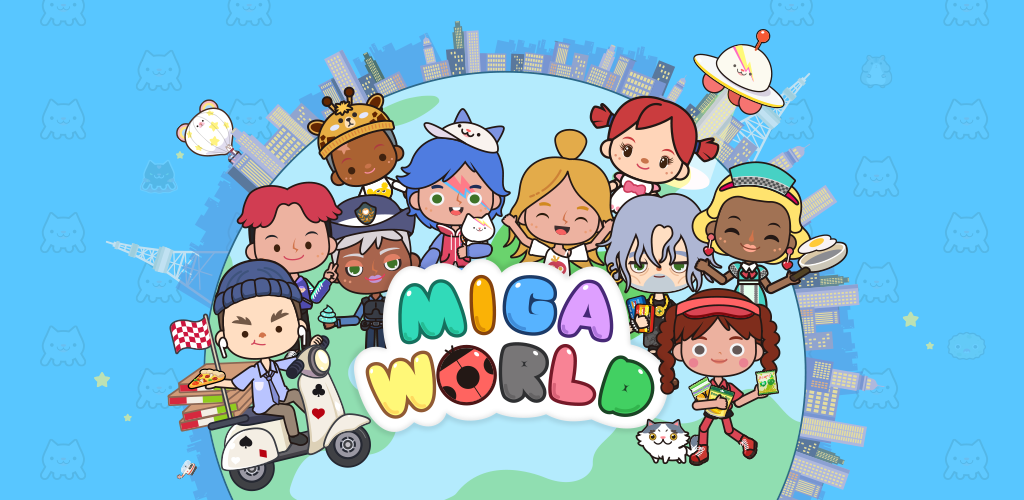
Miga Town: My World is the polished alternative from XiHe Digital. The art style is softer and more pastel than Toca Boca, the character creator is generous with hairstyles and outfits, and content updates land monthly with new locations, characters, and pets. 70+ locations, 140 characters, 150 pets, and 700+ outfits at the time of writing.
Miga Town vs Talking Tom & Friends: World: Miga has a more consistent monthly update cadence and a softer aesthetic. Talking Tom has a louder personality but less depth.
Where it falls short: monetization is per-location like My Town World, which adds up. The aesthetic appeals more to younger kids who like cute characters than to older kids who want freedom.
Pricing:
- Free: starter locations.
- In-app purchases: per-location packs, character packs, outfit bundles.
Migrating from Talking Tom World: install, customize a character, then pick one or two location packs that match the kid’s interests rather than buying broadly.
Bottom line: the sweet alternative if your kid likes kawaii aesthetics and consistent monthly content.
6. Avakin Life, for older kids and teens

Avakin Life is the 3D virtual world for older kids, teens, and adults. The character creator is detailed (body type, face, skin, eyes, hair), the wardrobe is enormous, and the world is fully social: chat, parties, fashion contests, weekly events. Lockwood Publishing has been running it since 2013, which means a deep universe and a stable game economy. Toca Boca World is for younger kids; Avakin Life is what they age into.
Avakin Life vs Talking Tom & Friends: World: Avakin is for an older audience and is fully social with chat. Talking Tom is for a younger audience and is single-player.
Where it falls short: age rating is 12+ and the social aspect needs parental judgment. Avakoins (the in-game currency) and time-limited events can drive spending.
Pricing:
- Free: full game with daily Avakoin grants.
- In-app purchases: Avakoins for outfits, homes, and event items.
Migrating from Talking Tom World: install only if the kid is old enough for chat-enabled social spaces. Set up parental controls before the first session.
Bottom line: the right move when the kid has aged out of Toca Boca and wants a real social 3D world.
7. Roblox, anything-goes user-generated

Roblox is the elephant in the room. The platform is not a single creative-play game, it is millions of user-generated experiences ranging from obstacle courses to roleplay simulators to dress-up to horror games. For sandbox-loving kids, the variety is unmatched. The platform also has the strongest set of parental controls in the category: account restrictions by age, chat filters, screen-time limits, and verified-parent supervision.
Roblox vs Talking Tom & Friends: World: Roblox has effectively unlimited content. Talking Tom is curated by one publisher, which is both the limit and the appeal.
Where it falls short: content quality varies wildly because anyone can publish. Robux (the currency) drives spending across thousands of separate experiences. Chat and online interaction need parent setup before the kid plays.
Pricing:
- Free: full platform access.
- Robux: in-app currency for cosmetics and game-specific items.
- Premium: monthly subscription with a Robux stipend.
Migrating from Talking Tom World: install, set up the account with the actual kid age, configure parental controls in the Family Center, and pick a small set of experiences together for the first few sessions.
Bottom line: the limitless option, with the trade-off that parental setup matters more here than anywhere else on this list.
How to choose
Pick Toca Boca World if you want the safest, deepest creative-play app with no ads. Pick My Town World for the most locations and dollhouse roleplay. Pick Sago Mini World for ages 2-6 where ad-free is non-negotiable. Pick My Talking Tom 2 if your kid actually wanted a virtual pet rather than a sandbox. Pick Miga Town: My World for monthly content drops in a softer aesthetic. Pick Avakin Life when the kid is old enough for a social 3D world. Pick Roblox if you are willing to set up parental controls properly.
Stay on Talking Tom & Friends: World if your kid is attached to the Talking Tom characters and the ad load does not bother you. The new sandbox has charm and Outfit7 will keep adding to it. The case for moving is strongest when ad exposure or sandbox depth is the actual sticking point.
FAQ
Is Talking Tom & Friends: World safe for kids? Yes, in the sense that there is no online chat and no user-generated content. The age-rating concern is the ad load in the free version, which exposes kids to third-party promotions.
What is the best free Talking Tom & Friends: World alternative? Toca Boca World has the most generous free content. My Town World gives 2 free locations. For ad-free at no cost, none of the alternatives qualify, the no-ad experience is paid in this category.
Which alternative is best for younger kids? Sago Mini World for ages 2-6 specifically. Toca Boca Jr (the toned-down Toca Boca app) for ages 5-8. Talking Tom World skews older than these two.
Can I move my Talking Tom progress to another game? No. Saved characters, outfits, and decorations are not portable across publishers. Treat the move as a fresh start.
Why is my kid bored of Talking Tom World? The catalog is smaller than competitors and content updates are slower. Toca Boca World, My Town World, and Miga Town all add new locations more frequently.
Is Roblox a good replacement? Roblox is a different product entirely. It is the right replacement when the kid wants endless variety and you have time to configure parental controls. It is the wrong replacement when you want a curated single-publisher experience.
