The Blood of Dawnwalker team spent months debating a time system that would have forced players to think about every hour in the day. The strict version got walked back. What is left is a time mechanic that shapes the game without punishing a wrong turn. Whether the softer version is the right call will get tested when the game ships. What already exists, from small indies to big JRPGs, is a shelf of games where the whole point is the clock.
We picked eight desktop RPGs (broadly defined) where time manipulation is the mechanic, not a mode. Every one lives on Steam or GOG, most run natively on macOS and Linux, and all of them respect a save file that lets you replay a chapter with new knowledge.
What to look for in a time-manipulation RPG
- Time is a real mechanic, not a cutscene device.
- Repeated loops or rewinds reveal new information, not just replay old ones.
- The story branches in ways the player can only see by using the mechanic.
- Save systems support experimentation without punishing curiosity.
- The runtime respects your evening (some of these are short by design, and that is fine).
The eight below hit all five. The rank starts with the games where the clock touches everything.
Quick comparison
| Game | Best for | Style | Length | Native platforms |
|---|---|---|---|---|
| Life is Strange | Rewind-driven story | Narrative adventure | 12-15 hrs | Windows, macOS, Linux |
| Undertale | Save-file awareness | JRPG | 8-10 hrs | Windows, macOS, Linux |
| Outer Wilds | 22-minute loop of a solar system | Exploration | 20-30 hrs | Windows, macOS, Linux |
| 13 Sentinels: Aegis Rim | Multi-character time weave | Visual novel + strategy | 30 hrs | Windows |
| The Sexy Brutale | Same day, from different rooms | Puzzle adventure | 8-10 hrs | Windows, macOS, Linux |
| Twelve Minutes | 12-minute loop of a marriage | Point-and-click thriller | 5-8 hrs | Windows, macOS |
| Braid | Layered time puzzles | Platformer | 4-6 hrs | Windows, macOS, Linux |
| Chrono Cross | Parallel-world JRPG | Turn-based RPG | 40 hrs | Windows |
1. Life is Strange, best for a rewind-driven story
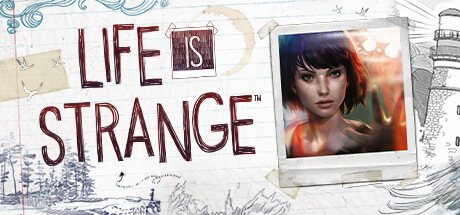
Life is Strange puts rewind in the player’s hands and asks what a teenager would do with it. Every dialogue choice can be replayed, but the consequences fold forward across five episodes. The 2015 original is the one that started the wave; the sequels kept the mechanic honest.
Where it falls short: the rewind is limited to the current scene. Bigger consequences carry over regardless.
Pricing:
- Base game around $19.99 (frequent sales below $5).
Platforms: Windows, macOS, Linux.
Download: Steam store page
Bottom line: The right entry point for anyone new to time-manipulation storytelling.
2. Undertale, best for save-file awareness
Undertale is the JRPG that reads your save file and remembers what you did. The mechanic is not called time manipulation, but the game treats reloads, resets, and route swaps as canon. Playing the same battle twice with different intents is a different game.
Where it falls short: the pixel-art bullet-hell battles ask for reflexes some story players do not have.
Pricing:
- Base game around $9.99.
Platforms: Windows, macOS, Linux.
Download: Steam store page
Bottom line: The pick when a JRPG that reads your reloads is the whole draw.
3. Outer Wilds, best for a 22-minute loop of a solar system
Outer Wilds is a solar system that ends every 22 minutes. Every loop the player learns something, and the knowledge carries into the next one. It is a physics-driven detective story where the clock is a texture on every scene.
Where it falls short: the movement takes a while to master, and the first loops feel aimless. That is by design.
Pricing:
- Base game around $24.99. Echoes of the Eye DLC around $14.99.
Platforms: Windows, macOS, Linux.
Download: Steam store page
Bottom line: The right pick for anyone who wants a game about learning, not leveling.
4. 13 Sentinels: Aegis Rim, best for a multi-character time weave
13 Sentinels: Aegis Rim tells 13 stories across four eras that fold into one story. Each protagonist’s timeline is unlocked out of order, and the mystery only closes when the player pieces the timelines together. The strategy layer is thin; the writing does the heavy lifting.
Where it falls short: the tactical battles are the weakest part of the package. Some players skip them on story mode.
Pricing:
- Base game around $59.99 (heavy sale discounts available).
Platforms: Windows.
Download: Steam store page
Bottom line: The pick when a narrative puzzle across 13 protagonists is the pitch.
5. The Sexy Brutale, best for the same day, from different rooms
The Sexy Brutale loops the same 12 hours in a masked-ball mansion. Save one guest, learn the routine of another, and stack the knowledge to save them all. The mask system is the mechanic; the time loop is the frame.
Where it falls short: the story is on the shorter side. Some players finish it in a weekend.
Pricing:
- Base game around $19.99.
Platforms: Windows, macOS, Linux.
Download: Steam store page
Bottom line: The right pick for anyone who wanted a Groundhog Day whodunit.
6. Twelve Minutes, best for a 12-minute loop of a marriage
Twelve Minutes compresses a domestic thriller into 12 minutes and asks the player to replay it until the truth surfaces. It is a point-and-click with a marquee voice cast and a claustrophobic script.
Where it falls short: the ending is divisive, and the loop’s tight structure can frustrate players who want more time.
Pricing:
- Base game around $24.99.
Platforms: Windows, macOS.
Download: Steam store page
Bottom line: The pick for a short, dense evening.
7. Braid, best for layered time puzzles
Braid is the puzzle-platformer that made time a puzzle piece. Each world layers a new rule on the rewind: reversed causality, time-shadowed clones, and slowdown fields. The 2024 Anniversary Edition sharpens the sprites and adds developer notes.
Where it falls short: the puzzles are hard by design. The last worlds ask for patience.
Pricing:
- Anniversary Edition around $19.99.
Platforms: Windows, macOS, Linux.
Download: Steam store page
Bottom line: The right pick for anyone who wants a puzzle game built entirely around the clock.
8. Chrono Cross: The Radical Dreamers Edition, best for parallel-world JRPG
Chrono Cross is the classic JRPG that split reality in two and asked the player to reconcile it. The 2022 Radical Dreamers Edition brought the game to Steam with cleaner textures and quality-of-life tweaks. Time is the trellis; parallel worlds do the branching.
Where it falls short: the port is not a full remake. Some sprites still look every bit their 1999 age.
Pricing:
- Base game around $19.99.
Platforms: Windows.
Download: Steam store page
Bottom line: The pick for a long JRPG with a parallel-world spine.
How to pick the right one
- Rewind story with modern polish: Life is Strange.
- JRPG that reads your saves: Undertale.
- Physics detective in a 22-minute loop: Outer Wilds.
- Multi-protagonist narrative puzzle: 13 Sentinels: Aegis Rim.
- Whodunit set in one long day: The Sexy Brutale.
- Short claustrophobic thriller: Twelve Minutes.
- Puzzle-platformer built on rewind: Braid.
- Long JRPG with parallel worlds: Chrono Cross.
FAQ
Which of these has the shortest runtime?
Braid at 4-6 hours, and Twelve Minutes at 5-8. Both are one-weekend games.
Which handles multi-character timelines the best?
13 Sentinels: Aegis Rim weaves 13 protagonists across four eras. It is the deepest execution on the list.
Do any of these punish reloading?
Undertale keeps a persistent memory of what you did. Life is Strange lets you rewind within a scene without punishment, but bigger choices carry forward. Outer Wilds resets every loop but keeps your knowledge.
Which of these run on Linux?
Life is Strange, Undertale, Outer Wilds, The Sexy Brutale, and Braid all ship native Linux builds. The rest run through Proton on Steam Deck.
Are these RPGs in the strict sense?
Undertale, 13 Sentinels, and Chrono Cross are RPGs. The rest are narrative adventures or puzzle games in the RPG-adjacent shelf. Time manipulation is the connecting mechanic.
Which handles New Game Plus well?
Undertale and Chrono Cross have a real NG+ pass with new content. Outer Wilds’s loop structure makes NG+ moot; the game is designed to be replayed inside a single save.