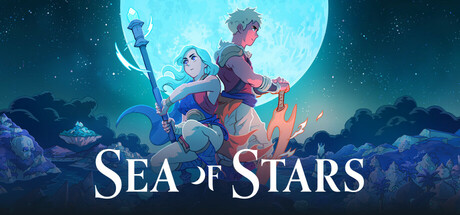
Sabotage Studio built Sea of Stars to feel like a Chrono Trigger and Golden Sun mashup, and it hit the mark for most players. Around thirty hours in you finish the true ending and the same follow-up question lands, what else scratches this itch? Polygon just spotlighted Zenonia 1 landing on Steam in the same “Final Fantasy meets Zelda” bracket, so the demand for retro JRPGs on PC is not slowing down. These seven Sea of Stars alternatives on PC each pull a different thread, timed hits, party swapping, action combat, or the raw pixel-era feel.
Quick comparison
| Game | Best for | Platforms | Price | Standout |
|---|---|---|---|---|
| Chained Echoes | 16-bit JRPG with modern systems | Win, Mac, Linux | Around $25 | No random encounters |
| CrossCode | Action RPG with ball puzzles | Win, Mac, Linux | Around $20 | Combat plus Zelda dungeons |
| Undertale | Story-first indie RPG | Win, Mac, Linux | Around $10 | Bullet hell battles |
| Eastward | Post-apocalyptic pixel art | Win, Mac | Around $25 | Zelda-like exploration |
| Hyper Light Drifter | Silent 2D action RPG | Win, Mac, Linux | Around $20 | No dialogue, all mood |
| Chrono Trigger | The template Sea of Stars borrows | Win | Around $15 | The original time travel JRPG |
| Octopath Traveler II | HD-2D JRPG with eight leads | Win | Around $60 | Job system and full voice acting |
Why players look past Sea of Stars
The combat loop, hit the button on the right frame, is the main draw and also the reason some readers bounce. It clicks or it does not, and if timed hits stress you out the whole thirty hours become a chore. Others finish the game and want more of the setting, and Sabotage’s next project is at least a year out.
Then there is the pacing. Sea of Stars front-loads its most striking areas, the last third leans on more of the same. Readers on Reddit’s r/JRPG keep asking for something with the same visual love but a stronger back half.
The seven Sea of Stars alternatives
Chained Echoes, best for a 16-bit JRPG with modern systems
Chained Echoes is a solo-developer JRPG that looks like a Super Famicom cart but plays like something built in 2022. There are no random encounters, no grinding for gear, and the combat uses an “overdrive” meter that punishes both button-mashing and stalling. It is denser than Sea of Stars and about the same length.
Where it falls short: Steep systems learning curve. First five hours throw a lot at you.
Pricing: Around $25 on Steam and GOG, often on sale for $12.
Migrating from Sea of Stars: Same pixel-art JRPG family, different combat philosophy.
Bottom line: The first pick for readers who wanted deeper systems.
CrossCode, best for action RPG with puzzles
CrossCode looks pixelated and plays like a 2D Zelda with ranged combat. Dungeons are packed with real puzzles, combat is snappy, and the story sits inside a fake MMO with more heart than the setup suggests. Runtime is around forty hours before the excellent A New Home DLC.
Where it falls short: The mid-game has a serious difficulty spike.
Pricing: Around $20 on Steam. DLC adds about $15.
Migrating from Sea of Stars: Similar exploration feel, real-time combat replaces turn-based.
Bottom line: For Sea of Stars fans who preferred the platforming to the fights.
Undertale, best story-first indie RPG
Undertale is the game that made most of these possible. Toby Fox’s battles blend turn-based menus with bullet-hell dodging, and the choice to spare or fight reshapes the whole run. It is a five-to-eight hour game with three completely different endings.
Where it falls short: Pixel art is intentionally rough, and the tone whips between joke and gut-punch.
Pricing: Around $10 on Steam and GOG. Rarely discounted, but never expensive.
Migrating from Sea of Stars: Timing-heavy combat carries over, everything else is different.
Bottom line: The right pick if you liked Sea of Stars’ warmth and want to see where the tradition started.
Eastward, best post-apocalyptic pixel art
Eastward is a Chucklefish-published action adventure where a father and daughter cross a broken world. Combat is Zelda-shaped, dungeons are large, and the pixel art is closer to a Studio Ghibli storyboard than anything else on this list. It is long, around thirty hours.
Where it falls short: Pacing drags in the middle chapters.
Pricing: Around $25 on Steam, often on sale for around $12.
Migrating from Sea of Stars: Similar visual love, action combat and denser story.
Download: Steam
Bottom line: The pick for readers who lingered on Sea of Stars’ backgrounds.
Hyper Light Drifter, best silent action RPG
Hyper Light Drifter is Heart Machine’s silent 2D action RPG. No dialogue, no exposition, just short intense combat and one of the best pixel-art worlds on Steam. It runs about ten hours and the sequel, Hyper Light Breaker, exists but is unfinished as of writing.
Where it falls short: Punishing bosses, and the story is deliberately opaque.
Pricing: Around $20 on Steam and GOG, often $5 on sale.
Migrating from Sea of Stars: Same love for hand-crafted worlds, very different pace.
Bottom line: The pick for readers who wanted Sea of Stars stripped of dialogue.
Chrono Trigger, best original template
Chrono Trigger is the 1995 JRPG Sea of Stars was written as a love letter to. Square’s PC port cleans up the visuals, keeps the fantastic soundtrack, and preserves the multiple endings. Twenty-five hours the first time, more if you chase all thirteen endings.
Where it falls short: UI is aged, and the PC port took years to reach a good version.
Pricing: Around $15 on Steam. Rarely discounted.
Migrating from Sea of Stars: Direct inheritance, most of Sea of Stars’ beats echo Chrono Trigger’s.
Download: Steam
Bottom line: If you have not played it, this is homework.
Octopath Traveler II, best HD-2D JRPG
Octopath Traveler II is Square Enix’s HD-2D sequel with eight interlinking protagonists and a job system. Combat is turn-based with a break-and-boost twist that rewards planning. Runs around eighty hours if you chase every character’s ending.
Where it falls short: Story chapters are siloed, character interactions are shallow between them.
Pricing: Around $60 on Steam. Sales bring it to $30.
Migrating from Sea of Stars: Same HD-2D lineage, much larger scope and slower pace.
Download: Steam
Bottom line: The pick if you want the biggest JRPG on the list.
How to choose
Pick Chained Echoes if you want more systems, less filler. Pick CrossCode if you liked the puzzle-and-platform side and want real-time combat. Pick Undertale if you are ready for a shorter, weirder ride. Pick Eastward for the art and the world. Pick Hyper Light Drifter if you want mood over words. Pick Chrono Trigger to see the source, and pick Octopath Traveler II if you want the biggest JRPG on the list.
Stay on Sea of Stars if what you loved was Sabotage’s specific timing-hit combat wrapped around Kirby-style traversal. Nothing else copies that exact combination.
FAQ
What game is Sea of Stars most compared to?
Chrono Trigger for structure, Golden Sun for combat, and Super Mario RPG for the timed hits. Sabotage’s developers have named all three in interviews.
Is Chained Echoes better than Sea of Stars?
Chained Echoes is denser and rewards planning more. Sea of Stars is prettier and easier to pick up. Both are worth playing, most JRPG readers finish one and then the other.
What is the closest game to Chrono Trigger on PC?
Sea of Stars, Chained Echoes, and Octopath Traveler II are the three most often named. Chrono Trigger’s own Steam port is available and holds up.
Can I run Sea of Stars alternatives on Linux or Steam Deck?
Chained Echoes, CrossCode, Undertale, and Hyper Light Drifter all ship native Linux builds. Eastward and Octopath Traveler II run through Proton, verified on Steam Deck.
Is there a free Sea of Stars alternative?
None free legally. Undertale drops to $5 in most sales, Chained Echoes to $12, and Hyper Light Drifter to $5. All three are usually the cheapest way into the genre.