Transport Fever 3 lands later this year, and for the first time in a while, Cities: Skylines has a peer that could pull long-time players away. The Urban Games trailer promises multi-modal logistics with the kind of economy simulation Paradox has never really matched, which reopens a question a lot of builders had shelved: is Cities: Skylines still the right home?
We spent time with seven Cities: Skylines alternatives on Windows, Mac, and Linux to answer that. Some are near-drop-in replacements, others swap the sandbox for tighter goals or a different era. Each entry below covers what it does better, what it does worse, current pricing, how painful the migration is, and where to buy it.
Quick comparison
| App | Best for | Platforms | Price | Standout feature |
|---|---|---|---|---|
| Cities: Skylines II | Direct sequel players | Windows | ~$50 | Deeper economy and terrain tools |
| Transport Fever 3 | Logistics-first builders | Windows, macOS, Linux | ~$40 | Multi-modal transport economy |
| Anno 1800 | Trade and supply chains | Windows | ~$50 | Layered production networks |
| Manor Lords | Medieval town crafting | Windows | ~$40 (Early Access) | Real-time tactical battles |
| Workers & Resources | Central-planning fans | Windows, Linux | ~$30 | End-to-end resource loops |
| Foundation | Organic, no-grid layouts | Windows | ~$30 (Early Access) | Free-form medieval streets |
| SimCity 4 | Nostalgia on a budget | Windows, macOS | ~$10 | Regional multi-city play |
Why players leave Cities: Skylines
The base game turned ten in 2025, and the cracks show. Three complaints come up over and over in community threads and Steam reviews.
DLC fatigue is the loudest. Between expansions, content creator packs, radio stations, and asset packs, the full catalogue runs past $250, and buying piecemeal creates awkward gaps where a tutorial mentions features you do not own. Players who came back after a break often feel priced out of their own save files.
Mod dependency is the second. Basic quality-of-life features like traffic lane control, better road tools, and functional public transport routing still need mods like Traffic Manager: President Edition or Move It. When Unity updates or a DLC ships, mods break, and hundreds of hours of city building sit in limbo until maintainers catch up.
The third is the engine. Unity handles the surface but chokes at high population densities, and multi-threading is limited enough that a fast CPU only helps so much. Cities: Skylines II was meant to solve this and has partially, though not without introducing its own performance issues on release.
The 7 best Cities: Skylines alternatives
Cities: Skylines II
Paradox’s direct sequel keeps the core loop and layers on real terrain deformation, deeper zoning, a proper economy simulation, and better traffic AI. Roads now have parallel modes, elevation is easier to manage, and services scale with actual demand rather than population brackets. For anyone who wants more Cities: Skylines with fewer mods, this is the obvious pick.
Where it falls short: Performance is still uneven on mid-range hardware even after several patches, and the modding scene, while growing on Paradox Mods, has not matched the depth of the original’s Steam Workshop. Some quality-of-life features from CS1 mods are still missing from vanilla CS2.
Pricing: Around $50 for the base game on Steam and the Epic Games Store. DLC packs are sold separately and bundle discounts appear during Steam sales.
Migrating from Cities: Skylines: Save files are not compatible, but the UI conventions carry over, so muscle memory transfers within an hour. Rebuild your favourite city layouts from screenshots.
Download: Steam · Epic Games · Paradox
Bottom line: The safest lateral move if you liked CS1 and want more of the same with fewer mod dependencies.
Transport Fever 3
Urban Games has built its reputation on freight, passenger flow, and multi-modal networks, and Transport Fever 3 pushes that further with proper road hierarchies, updated rail signalling, and an economy that reacts to genuine supply and demand. Cities grow around the routes you build rather than the other way around, which flips the CS mindset in a way logistics-minded players tend to love.
Where it falls short: Residential zoning is thinner than in Cities: Skylines. You do not sculpt districts and neighbourhoods the same way, and if your favourite part of CS is laying out picture-perfect suburbs, you will feel the loss.
Pricing: Around $40 on Steam and the Epic Games Store at launch, with the usual publisher pre-order discount.
Migrating from Cities: Skylines: Expect an adjustment. The camera controls are similar, but planning starts from routes, not zones. Give yourself two or three campaign scenarios before starting a serious sandbox map.
Download: Steam · Epic Games · Urban Games
Bottom line: The best pick if your CS cities always started with the highway and worked outward.
Anno 1800
Ubisoft’s historical builder puts you in the middle of a trade empire, balancing production chains, shipping lanes, and citizen demand across multiple islands. The visual density is high, the supply-chain puzzles are genuinely satisfying, and the pace is closer to a strategy game than a sandbox toy.
Where it falls short: It is not a free-form city builder. You cannot paint zones and watch a metropolis emerge. Buildings snap into functional grids around production needs, and roads mostly serve those needs rather than becoming characters in their own right.
Pricing: Around $50 for the base game on Steam, Epic, and Ubisoft Connect. Season passes bundle the major DLC and often go on sale for less than the base game.
Migrating from Cities: Skylines: The learning curve is real for a week. Focus on completing the tutorial and one full campaign before opening endless mode.
Download: Steam · Epic Games · Ubisoft
Bottom line: Pick this if you loved the supply-chain side of CS and can let go of modern zoning.
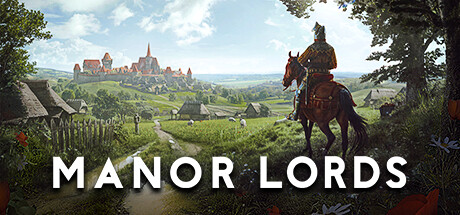
Manor Lords
Slavic Magic’s medieval builder pairs organic town growth with small-scale real-time battles, and the result is one of the most atmospheric city builders in years. Roads follow terrain, plots have variable shapes, and every family in your settlement has a job you can trace. The single-developer origin still shows in a good way: it feels handmade.
Where it falls short: Still in Early Access, so features arrive on the developer’s schedule and endgame content is thinner than the excellent early hours suggest. Expect patches to shift the meta.
Pricing: Around $40 on Steam and the Epic Games Store in Early Access.
Migrating from Cities: Skylines: The scale is smaller and slower. If you tend to build 500,000-citizen megacities, this will feel restrained. If you enjoyed painting district personalities, it will feel liberating.
Download: Steam · Epic Games
Bottom line: The best atmospheric builder on the list, with the caveat that you are buying into a work in progress.
Workers & Resources: Soviet Republic
3Division’s central-planning simulator takes you from cutting timber and mining coal all the way to selling manufactured goods on the international market, with citizen housing, transport, and services threaded through every step. Nothing is abstracted. If you want to build a bus route, you build the depot, hire the drivers, buy the buses, and route the roads.
Where it falls short: The learning curve is punishing. The tutorials help, but the first 20 hours involve a lot of stalled resource chains and confused citizens waiting for jobs that do not exist yet.
Pricing: Around $30 on Steam and GOG. Officially out of Early Access with active post-release updates.
Migrating from Cities: Skylines: You are trading zoning for planning. Cities: Skylines will feel like a toy afterwards, and that is either a feature or a warning depending on your temperament.
Bottom line: Buy this if the road-tools mod scene in CS was your favourite part and you want that level of control everywhere.
Foundation
Polymorph Games ditches the grid entirely. Roads follow the paths villagers actually walk, and buildings settle onto terrain in ways that make screenshots feel like paintings rather than plans. Zones are painted with a brush, not a rectangle tool, and every town takes on a different silhouette because the topography always wins.
Where it falls short: Still Early Access, and while updates land regularly, endgame goals are thin. Long-term motivation depends on the story you invent for your town, not on systems the game gives you.
Pricing: Around $30 on Steam and GOG in Early Access. Occasional sales bring it under $20.
Migrating from Cities: Skylines: Forget everything you know about the road tool. Foundation rewards patience and light hands, not blueprint-perfect symmetry.
Download: Steam · GOG · Polymorph
Bottom line: The right pick when you want to build something beautiful, not something optimal.
SimCity 4
Maxis released this in 2003, and it still sells for a reason. Regional play, where a full map is a mosaic of smaller cities feeding each other with commuters and utilities, remains one of the best ideas the genre has produced, and it lives on here without a modern equivalent. The Network Addon Mod community keeps the roads fresh.
Where it falls short: The UI feels every one of its two decades, and the game is single-threaded, so a modern CPU barely helps once a city passes about 250,000 citizens. Windowed mode support is patchy on high-DPI displays.
Pricing: Around $10 on Steam and GOG for the Deluxe Edition, which is the version to buy. Frequently under $5 during seasonal sales.
Migrating from Cities: Skylines: Everything will feel smaller and stiffer at first, then the regional mechanic clicks and it feels bigger than either CS game.
Bottom line: The best value on this list by a wide margin, and still the only game doing regional play seriously.
How to choose
Pick Cities: Skylines II if you want more of the same. It is the lowest-friction migration, keeps the muscle memory, and solves most of CS1’s zoning and terrain complaints. Accept that the mod scene is still catching up.
Pick Transport Fever 3 if your favourite part of any city was the transit map. It rewards logistics thinking, punishes lazy road layouts, and treats trains with the seriousness Cities: Skylines never quite managed. The residential side is thinner, so if you love painting neighbourhoods, look elsewhere.
Pick Anno 1800 if the supply-chain puzzles pulled you in more than the aesthetics. It is a strategy game wearing a builder’s clothes, and once the trade network clicks, nothing else feels quite as clever.
Pick Manor Lords if you want atmosphere and can tolerate Early Access limits. It is the most beautiful game on this list at a per-house level, and battles add a genre-hop that keeps sessions varied.
Pick Workers & Resources: Soviet Republic if road-tool and traffic-manager mods were half the reason you played CS. It gives you that control natively, applied to every system in the game. Budget 40 hours before the fun starts.
Pick Foundation if you have grown tired of grids. It rewards patience and improvisation rather than planning.
Pick SimCity 4 if you have $10 and a curiosity about regional play. Nothing else on this list does it, and it still holds up.
Frequently asked questions
What is the closest game to Cities: Skylines? Cities: Skylines II is the closest by a wide margin because Paradox built it as a direct successor with the same zoning, road, and service loop. Outside the sequel, Transport Fever 3 is the nearest in spirit for logistics fans and SimCity 4 is the nearest in structure for regional play.
Is Cities: Skylines II better than Cities: Skylines 1? Cities: Skylines II has a deeper economy, better terrain tools, and stronger vanilla features, so the base game is technically stronger. However, CS1 has a decade of Steam Workshop mods that add features CS2 still lacks, and performance on modest hardware is often smoother. If you have a strong PC and prefer vanilla, pick CS2. If you love mods, stay with CS1.
What is a cheaper alternative to Cities Skylines? SimCity 4 Deluxe is around $10 on Steam and GOG and often drops below $5 during sales. Foundation and Workers & Resources: Soviet Republic sit near $30, which is still cheaper than the current Cities: Skylines II bundle and considerably cheaper than the full CS1 catalogue with DLC.
Are there any free Cities: Skylines alternatives? There are no full-featured free equivalents. OpenTTD is free and open source, but it is a transport simulator rather than a city builder. Micropolis, the open-source release of the original SimCity code, is free but very dated. For a modern city-building experience, expect to pay at least $10 for a legitimate copy.
What is the best city builder on Steam Deck or Linux? Workers & Resources: Soviet Republic has a native Linux build and runs well on Steam Deck at medium settings. Transport Fever 3 is confirmed for Linux at launch, following the earlier games in the series. Cities: Skylines runs well on Steam Deck through Proton once you cap population growth; Cities: Skylines II is more demanding and works best on desktop Linux with a discrete GPU.
Do any of these games support multiplayer? Not in a serious way. City builders remain a mostly single-player genre. Some mods add asynchronous features to Cities: Skylines, but for competitive or cooperative building, the genre has not caught up. Transport Fever 3 has stated plans for cooperative play post-launch, though details are limited.