Polygon’s coverage of the Transport Fever 3 trailer noted something the city-builder community has been quietly aware of: the transport tycoon sub-genre never really went away. It just spent a decade being smaller than the city-builder scene next door. Urban Games’ new entry, with proper multi-modal networks and a demand-driven economy, is the loudest signal in years that route-first sims are back on the map.
We spent time with seven transport tycoon games on Windows, Mac, and Linux to answer a specific question: if you care about railroads, freight, and route optimization more than about painting suburbs, what is worth installing right now? Some of these are free and older than most people playing them. Some are freshly released. Every entry below covers what it does well, what it does badly, current price, and where to buy it.
What to look for in a transport tycoon game
Transport tycoons share DNA but split on four choices that will decide whether you enjoy any given entry.
- Route granularity. Do you draw single lines or wire a full national network with signalling, priority, and freight balancing?
- Economy model. Is production abstract (numbers in a box) or physical (goods loaded onto real wagons and delivered to real factories)?
- Era and scope. Nineteenth-century industrial expansion, mid-century highway build-out, or full 1850-to-present arcs?
- Modding. Is the game hostile, tolerant, or actively supported by workshop-style content?
We weighted route granularity and economy model most heavily. If either is too shallow, the game turns into a placement puzzle rather than a network simulator.
Quick comparison
| Game | Best for | Platforms | Price | Standout feature |
|---|---|---|---|---|
| OpenTTD | Long sessions on any hardware | Windows, macOS, Linux | Free | Community-driven newGRF content |
| Transport Fever 3 | Modern multi-modal networks | Windows, macOS, Linux | ~$40 | Demand-driven economy across four modes |
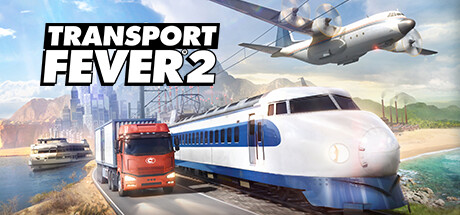
| Transport Fever 2 | Route-first sim, proven | Windows, macOS, Linux | ~$30 | Deep 200-year campaign |
| Railway Empire 2 | Approachable rail management | Windows, macOS | ~$50 | Continent-scale maps with dual-tracking |
| Mashinky | Puzzle-style rail supply chains | Windows | ~$25 (Early Access) | Multi-currency token economy |
| Sid Meier’s Railroads! | Nostalgic short sessions | Windows, macOS | ~$10 | Tight scenario play from 2006 |
| Trainz Railroad Simulator 2022 | Prototype rail modelling | Windows | ~$45 | Massive prototype-accurate route library |
The 7 best transport tycoon games for desktop
1. OpenTTD
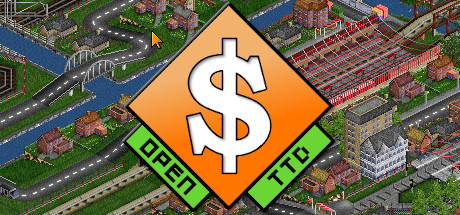
The open-source descendant of Chris Sawyer’s 1994 classic has been in continuous development since 2004 and still runs on almost anything with a screen. The vanilla game covers 1950 to 2050 across road, rail, sea, and air, and the newGRF content system lets communities add locomotives, vehicles, station buildings, and full industry sets without touching the base install.
Where it falls short: the isometric 2D presentation lands somewhere between charming and dated depending on the day. Multiplayer works but requires port forwarding or a public server list, and matchmaking is minimal.
Pricing: free forever, hosted on the official openttd.org site with a mirror on Steam.
Download: Steam · openttd.org · GOG
Bottom line: the first game to try, and the one you keep coming back to when the modern entries feel too on-rails.
2. Transport Fever 3
Urban Games’ 2026 entry rebuilds the series around a demand-driven economy, adding proper road hierarchies, updated rail signalling, and multi-modal container flow between sea, rail, and road. Cities grow where the routes go, not the other way around, and freight lines actually stop making money when their destination industries close.
Where it falls short: the campaign leans hard on scripted scenarios in the early hours, and sandbox play only opens up after several tutorial missions. Modding tools have been announced but were not final at launch.
Pricing: around $40 on Steam, GOG, and the Epic Games Store. Native Linux and macOS builds ship alongside Windows.
Download: Steam · GOG · Epic Games
Bottom line: the strongest all-round pick in 2026 if you want a modern engine, proper freight, and a real economy.
3. Transport Fever 2
The 2019 predecessor is still one of the most complete transport sims ever made. Three campaigns span 200 years across Europe, America, and Asia, and the free-play mode remains generous with map sizes and mod support. The Steam Workshop is deep enough that a five-year-old game still has fresh content most weeks.
Where it falls short: signalling and junction placement can be finicky in dense networks, and the game does not do a great job of surfacing why a specific route stopped being profitable. Expect to open your ledger often.
Pricing: around $30 on Steam and GOG. Frequently drops to $10-15 during seasonal sales.
Bottom line: the value pick if Transport Fever 3 is out of budget or your PC is on the older side.
4. Railway Empire 2
Kalypso’s rail-focused sim narrows the scope to trains and does that job well. Continent-sized maps, dual-tracking that avoids the worst of the collision headaches, and a campaign that walks through nineteenth-century American and European rail history make it the friendliest of the modern entries.
Where it falls short: road, sea, and air are almost entirely absent. If you want the multi-modal side of Transport Fever, this is not it. The economy is also thinner than Transport Fever 3’s, tilting the game more toward operations than logistics.
Pricing: around $50 on Steam and the Microsoft Store. Windows and macOS builds are official.
Download: Steam · Microsoft Store
Bottom line: the pick if trains are the point and highways are not.
5. Mashinky
Jan Zeleny’s one-person project has been in Early Access since 2017 and quietly grew into one of the most interesting rail sims on Steam. The five-currency token economy turns delivery into a resource-management puzzle: you need coal to earn tokens, tokens to buy locomotives, locomotives to move more coal. Every route matters because the money is not fungible.
Where it falls short: pace is slow, especially in the early eras, and the tutorial only takes you so far. The visual style is deliberately spartan.
Pricing: around $25 on Steam in Early Access. Development has slowed compared to the peak years but updates still land.
Download: Steam
Bottom line: the puzzle-first pick. It rewards experimentation more than efficiency.
6. Sid Meier’s Railroads!
Firaxis’s 2006 update to the Railroad Tycoon lineage still sells because it does the short-session case better than most modern entries. Maps finish in a couple of hours, competitors bid against you for track rights, and the stock-market layer gives late-game momentum most sandbox sims lack.
Where it falls short: the UI is nearly two decades old and never got a modern re-release. Widescreen support is inconsistent, and 4K users will want a community patch or DPI-scaling workaround.
Pricing: around $10 on Steam and GOG, often under $3 during sales.
Bottom line: the cheap short-session pick, still the best entry-level game in the sub-genre.
7. Trainz Railroad Simulator 2022
N3V’s long-running Trainz series sits between transport tycoon and full rail simulation. The map library runs into the tens of thousands, and the prototype-accurate route content is unmatched: real North American short lines, British Rail routes, and Australian coal networks are all first-party or community-curated.
Where it falls short: the economic layer is thin compared to Transport Fever or Railway Empire, and the base install is heavy on tutorials before the sandbox opens up. Steam Workshop content quality varies wildly.
Pricing: around $45 for the standard edition on Steam and the Trainz Store, with regular sales below $20.
Download: Steam · Trainz Store
Bottom line: the pick if driving and dispatching real prototype routes matters more to you than building an economy.
How to pick
Start with OpenTTD if you have never played the sub-genre. It is free, tolerant of any hardware, and every design decision Transport Fever and Railway Empire made started as a reaction to it.
Buy Transport Fever 3 if you want the current-generation experience on Windows, Mac, or Linux and you value multi-modal freight over pure rail focus. It is the most complete modern entry.
Stay on Transport Fever 2 if you are on older hardware or you want the deepest campaign in the series. The Workshop keeps it fresh.
Pick Railway Empire 2 if trains are the entire point and you would rather manage than build. Its campaign is the friendliest onboarding in the sub-genre.
Try Mashinky if you want a smaller, slower, more puzzle-driven game where every locomotive matters.
Grab Sid Meier’s Railroads! if you want short sessions and a stock market. It still holds up.
Install Trainz if prototype accuracy and driving individual trains is why you are here. Skip it if you want a strong economy layer.
Frequently asked questions
What is the modern equivalent of Transport Tycoon Deluxe? OpenTTD is the direct descendant, developed since 2004 as the open-source continuation of Chris Sawyer’s Transport Tycoon Deluxe. Transport Fever 3 is the modern-3D-engine equivalent, built by former OpenTTD-community developers.
Is Transport Fever 3 better than Transport Fever 2? Transport Fever 3 has a deeper demand-driven economy, a better road hierarchy, and cleaner rail signalling, so the base experience is stronger. Transport Fever 2 has five years of Workshop content and a proven campaign, which matters if mod depth is important or if your PC is older.
Is OpenTTD really free? Yes. OpenTTD is licensed under GPLv2 and has been free since the 2004 release. The Steam and GOG versions add convenience (Cloud saves, automatic updates) but are also free.
Are any transport tycoon games good on Mac or Linux? OpenTTD runs natively on macOS and Linux and has for years. Transport Fever 2 and Transport Fever 3 both ship native builds for all three platforms. Railway Empire 2 has a native macOS build. The rest are Windows-only.
Which transport tycoon runs best on Steam Deck? OpenTTD is the smoothest choice by a wide margin: it will happily push 60 fps at any zoom level. Transport Fever 2 is playable on medium settings once you cap the population growth. Transport Fever 3 works but wants desktop hardware for large late-game networks.
Do any of these games have multiplayer? OpenTTD has the best multiplayer support, with dedicated server lists and long-running community games. Transport Fever 3 has cooperative modes planned but not fully implemented at launch. The rest are single-player.