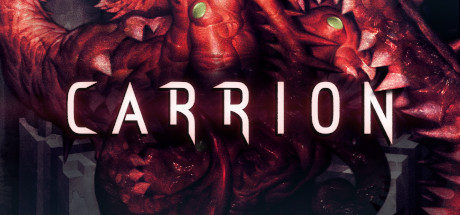
Carrion sits at 80% off in the current Steam sale, and the reviews are drawing new players back to a five-hour game a lot of people finished in one sitting six years ago. The pitch still lands: you are the tentacled thing in the vents, and the scientists in white coats are lunch. What people ask next, once the credits roll, is where else that feeling lives. This roundup covers the best Carrion alternatives on PC in 2026, focused on games that either put you in the monster’s skin or capture the same claustrophobic, atmospheric horror-action loop on Windows, macOS, and Linux.
We picked seven that hold up in 2026, span a range of prices, and cover the two threads Carrion pulls on: the reverse-horror power fantasy and the tense, exploration-driven creature game. Every pick has been released and patched. Nothing is in early access or abandoned.
Quick comparison
| Game | Best for | Verified platforms | Typical price | Standout |
|---|---|---|---|---|
| Prototype 2 | Reverse-horror power fantasy in an open city | Windows | Budget, often on sale | Shape-shifting biomass combat |
| Maneater | Playing the apex predator, chill pacing | Windows | Mid-tier, often on sale | Grow-and-evolve shark RPG |
| Scorn | Body-horror atmosphere and biomechanical dread | Windows | Mid-tier, often discounted | First-person Giger-inspired world |
| Rain World | Creature survival with real ecology | Windows, macOS, Linux | Mid-tier, often on sale | Predators that hunt you back |
| Signalis | Slow, deliberate survival horror in 2D | Windows, macOS | Mid-tier | Top-down Silent Hill homage |
| Blasphemous | Dark 2D metroidvania with tight combat | Windows, macOS, Linux | Mid-tier, often discounted | Grotesque religious imagery |
| Prey (2017) | Atmospheric first-person horror with shape-shifting mimics | Windows | Mid-tier, often on sale | Immersive sim toolkit on a doomed station |
Why people bounce off Carrion
Carrion is short, mean, and specific. Some of what makes it work in the first hour also causes people to put it down before the last one.
Getting lost in the vents
The most common complaint on Reddit and Steam is the lack of a map. Carrion’s world is one interconnected facility, and after a couple of ability unlocks it starts folding back on itself in ways that feel deliberate to some players and hostile to others. If you play in short sessions, you will reload a save and spend ten minutes finding the last room you were in.
Under five hours
Full playthroughs land between four and six hours. That is by design, but at full price it makes some buyers hesitant, and it leaves a lot of players wanting a longer arc once they get comfortable being the monster.
Shrink-grow puzzle fatigue
The size-shifting mechanic is central. It is also the thing players cite when they say the pacing sags in the second half. Splitting yourself to hit two switches, then reforming to move a heavy door, gets old faster than the combat does.
Chaotic scrums
Wading into a room with six armed guards and a mech is the game’s best moment when it works. When it does not, you are mashing grabs while the camera tries to follow tentacles going in six directions. A few players want tighter, more readable combat than Carrion offers.
The alternatives
Prototype 2 - Best for the pure reverse-horror power fantasy
Prototype 2 hands you a shape-shifting bio-weapon named James Heller and turns him loose on a quarantined New York overrun by the Blacklight virus. You consume soldiers to steal their identities, whip out claws or tendrils on command, and level entire military convoys. It is the closest thing on PC to Carrion’s core loop of “monster arrives, humans die, monster leaves,” scaled to a full open city instead of a facility.
The game runs on modern Windows without much fuss and has a stable modding scene for anyone who wants better textures or fixed cutscene framerates. Combat is fast, over the top, and rewards experimentation with ability combos, which is exactly what Carrion players tend to want more of.
Where it falls short: No macOS or Linux native build. Some players report first-launch crashes on the Radical Entertainment logo that need a small tweak to run.
Pricing:
- Free demo: No.
- Paid: Budget tier, and it drops further in Steam sales.
- vs Carrion: Longer campaign, more variety, but less atmospheric and less horror-driven.
Migrating from Carrion: Nothing to import, this is a full separate game. Expect a fifteen to twenty hour campaign. If Carrion left you wanting more room to move, Prototype 2 gives you a whole city.
Download: Steam
Bottom line: The most direct Carrion vs Prototype 2 comparison lands in Prototype’s favor if you cared more about being the monster than about the horror atmosphere.
Maneater - Best for the shark version of the same fantasy
Maneater calls itself a “ShaRkPG” and it is not joking. You start as a bull shark pup, eat everything smaller than you, unlock evolution slots, and grow into an apex boss that hunts helicopters. Progression is the hook Carrion does not have, and it turns a similar core action loop into a twenty-hour arc across seven open ocean regions.
Combat is tail whips, jaw grabs, and mid-air ambushes on boats. Voiceover from a shark-hunting reality show ties the missions together with a straight face. It is lighter in tone than Carrion but scratches the same “I am the apex predator” itch.
Where it falls short: Windows only on Steam. Underwater navigation gets repetitive across long play sessions, and the humans-on-boats AI is thin.
Pricing:
- Free demo: No, though the base game frequently drops to a low price in Steam sales.
- Paid: Mid-tier for the standard edition, with an Apex Edition bundle that adds the Truth Quest DLC.
- vs Carrion: Longer, easier, less scary. Bigger sense of progression.
Migrating from Carrion: No shared saves or accounts. Plan for around twelve hours to reach the credits, twenty for full completion.
Download: Steam
Bottom line: Best pick if you want to keep playing the monster but you are done with tight corridors.
Scorn - Best for Carrion’s aesthetic taken to a first-person extreme
Scorn is a first-person atmospheric horror game built around H.R. Giger and Zdzislaw Beksinski influences. You wake up in a world made of bone, cartilage, and machinery you cannot tell apart, and you spend the game solving spatial puzzles and fighting biomechanical creatures. It is not a reverse-horror game, but it captures the exact tone Carrion trades in when the walls go wet.
The environment does most of the work. Every door is a valve. Every weapon has a socket you slide your arm into. If Carrion sold you on the flesh-and-metal atmosphere as much as the tentacles, Scorn is the deepest version of that world on Steam.
Where it falls short: Windows only. Combat is deliberately awkward, ammo is scarce, and death sends you back further than modern shooters usually do.
Pricing:
- Free demo: No, but the game hits deep discounts in most seasonal Steam sales.
- Paid: Mid-tier standard edition, with a deluxe edition that adds the soundtrack and art book.
- vs Carrion: Slower, quieter, more puzzle-heavy, and first-person instead of top-down.
Migrating from Carrion: No overlap in saves or systems. Around six to eight hours per playthrough.
Download: Steam
Bottom line: Buy Scorn if the vibe was the reason you liked Carrion. Skip it if you needed the combat power fantasy.
Rain World - Best for creature survival with real teeth
Rain World puts you in control of a slugcat, a small predator that is also very much prey, and drops you into a decaying industrial ecosystem where every other creature has its own goals. You hunt bats, hide from lizards, and race the acid rain to the next shelter. It is a Carrion alternative for players who liked the “I am not human” part but want the horror to come from being outmatched.
The world is enormous, hand-drawn, and non-linear. Ecosystems change based on which creatures survive between your runs. It has the highest skill ceiling on this list and rewards you for learning terrain and predator patterns rather than raw combat.
Where it falls short: The learning curve is steep, and the game refuses to hold your hand. New players routinely die twenty times to the same lizard before it clicks.
Pricing:
- Free demo: No, but frequent Steam sale discounts.
- Paid: Mid-tier for the base game. The Downpour DLC adds five new playable slugcats and doubles the content.
- vs Carrion: Longer, harder, more open. Real Linux and macOS builds.
Migrating from Carrion: No shared saves. Budget forty hours for one campaign, more with Downpour.
Download: Steam
Bottom line: Pick Rain World if you want to feel like a small hungry animal in a world that does not care about you.
Signalis - Best for slow, deliberate survival horror
Signalis is a top-down sci-fi survival horror game in the Silent Hill and Resident Evil tradition, made by two people over seven years. You play Elster, a Replika android searching an abandoned facility on a frozen moon, and you spend the game managing a tiny inventory, solving analog puzzles, and shooting things you would rather run from.
It is not a reverse-horror pick. It is here because Carrion players often want more of the same dread when the game ends, and Signalis is the strongest atmospheric horror experience released this decade. The pixel art, the retro synth score, and the escalating cosmic-horror plot make it a natural next play.
Where it falls short: Windows and macOS only, no Linux native build. Combat is intentionally tight and can feel punishing if you burn through ammo in the first hour.
Pricing:
- Free demo: No.
- Paid: Mid-tier one-time purchase.
- vs Carrion: Different genre, similar horror sensibility, roughly double the length.
Migrating from Carrion: No overlap. Plan for around eight to ten hours on a first run, longer if you chase all four endings.
Download: Steam
Bottom line: The best next horror game if you want mood and story over more monster-playing.
Blasphemous - Best for dark 2D combat and exploration
Blasphemous is a punishing 2D action platformer set in a nightmare version of medieval Spain drenched in religious iconography. You play the Penitent One, a silent knight cutting through pilgrims, priests, and gods with a sword called the Mea Culpa. It sits in the same corner of Steam as Carrion because it is a 2D creature game with grotesque art, tight boss fights, and a metroidvania map you learn by dying.
The controls are tighter than Carrion’s, the combat is more readable, and the world is larger. If you liked being the strange thing walking through a hostile map but you wanted a longer game with real weight to each swing, Blasphemous is the pick.
Where it falls short: Not reverse horror. Boss difficulty spikes hard, and the second half assumes you have mastered parries.
Pricing:
- Free demo: No, though the game is inexpensive and frequently on sale on Steam.
- Paid: Mid-tier, with two large free content updates and one paid expansion.
- vs Carrion: Longer, harder, more combat depth, and it runs on all three desktop platforms.
Migrating from Carrion: No overlap. Around twenty-five hours to complete with side content.
Download: Steam
Bottom line: Best 2D pick after Carrion for players who want a real metroidvania with a horror coat of paint.
Prey (2017) - Best for atmospheric horror with a shape-shifting twist
Prey is an immersive sim on a stranded space station, Talos I, where the aliens can turn into any object in the room. You spend the first hour learning to distrust coffee mugs and desk lamps, and later you unlock the same shape-shifting ability yourself and start climbing through vents as a plastic cup. This is the reverse-horror element most Carrion players do not know exists in Prey.
The station is one continuous space you unlock through key items and abilities, which is the closest structural match to Carrion on this list. The atmosphere is dense, the audio design is genuinely scary in the first three hours, and the combat rewards planning and stealth as much as brute force.
Where it falls short: Windows only on Steam. First-person perspective and slower pacing than Carrion.
Pricing:
- Free demo: No, though the base game hits steep discounts in most Steam sales.
- Paid: Mid-tier one-time purchase, with a Digital Deluxe edition that includes the Mooncrash roguelite expansion.
- vs Carrion: Fifteen to thirty hour campaign, more systems, first-person immersive sim instead of top-down action.
Migrating from Carrion: No overlap. The Mooncrash DLC is worth the extra ask for anyone who liked Carrion’s short, replayable structure.
Download: Steam
Bottom line: The most substantial Carrion alternative on Steam if you can handle the switch to first-person.
How to choose
Pick Prototype 2 if what you wanted was more monster-in-a-city carnage and a full campaign to chew through, and you do not mind an older game.
Pick Maneater if the appeal was the grow-and-devour loop and the apex-predator fantasy, and you want a lighter tone than Carrion.
Pick Scorn if the atmosphere was the reason you finished Carrion, and you want to spend six more hours in a world that looks like it was grown, not built.
Pick Rain World if you want the hardest, deepest creature game on this list and you enjoy learning a world through repeated death.
Pick Signalis if you are done playing the monster and want the best pure survival horror game released in years.
Pick Blasphemous if you liked the 2D format and want tighter combat, a bigger map, and real macOS and Linux support.
Pick Prey (2017) if you can make the jump to first-person and you want the longest, most systemic game on the list.
Stay on Carrion if what you liked was the specific top-down power fantasy and you have not tried the Bonus Content DLC, which adds three new abilities and a small extra chapter. It runs about ninety minutes and gives the game one more clean loop.
FAQ
Is there a game like Carrion where you play as the monster?
Yes. Prototype 2 and Maneater are the closest matches on Steam. Prototype 2 gives you a shape-shifting bio-weapon in a quarantined city, and Maneater lets you grow from a shark pup into an apex predator across seven ocean regions. Both keep the core “you are the monster, humans die” loop from Carrion.
What is the best Carrion alternative on macOS or Linux?
Rain World and Blasphemous. Both have native builds for Windows, macOS, and Linux, both are actively supported, and both cover different sides of Carrion’s appeal. Rain World for creature survival, Blasphemous for dark 2D combat.
How long is Carrion compared to these alternatives?
Carrion is four to six hours. Prey (2017) is fifteen to thirty, Prototype 2 is fifteen to twenty, Blasphemous is around twenty-five with side content, Rain World is forty or more, and Signalis is eight to ten. Scorn and Maneater sit in between. Every game on this list is longer than Carrion.
Is there a cheaper Carrion alternative?
Prototype 2 is usually the least expensive of the seven, and it goes even lower during seasonal Steam sales. Blasphemous is also inexpensive when discounted. Neither is free, but both often land under the price of a coffee during a sale.
What is the closest game to Carrion in feel?
Prototype 2 for the reverse-horror combat and shape-shifting, Scorn for the biomechanical atmosphere, and Rain World for the creature-in-a-hostile-ecosystem structure. The three together cover the different reasons people love Carrion.
Is Carrion on Steam Deck?
Yes. Carrion is Steam Deck Verified and runs at full framerate on the default settings. Of the alternatives listed here, Blasphemous, Rain World, Signalis, and Prey (2017) are also verified or playable on Steam Deck.